Who has time to see and do everything, right? We've selected for you a list of things to do in Madeira, known as the "Island of Flowers", this Portuguese island which is a unique destination in the Atlantic Ocean.
It's also a volcanic island with stunning mountain scenery, beautiful rugged coastlines, charming villages and an incredible variety of tropical fruits, plants and flowers.
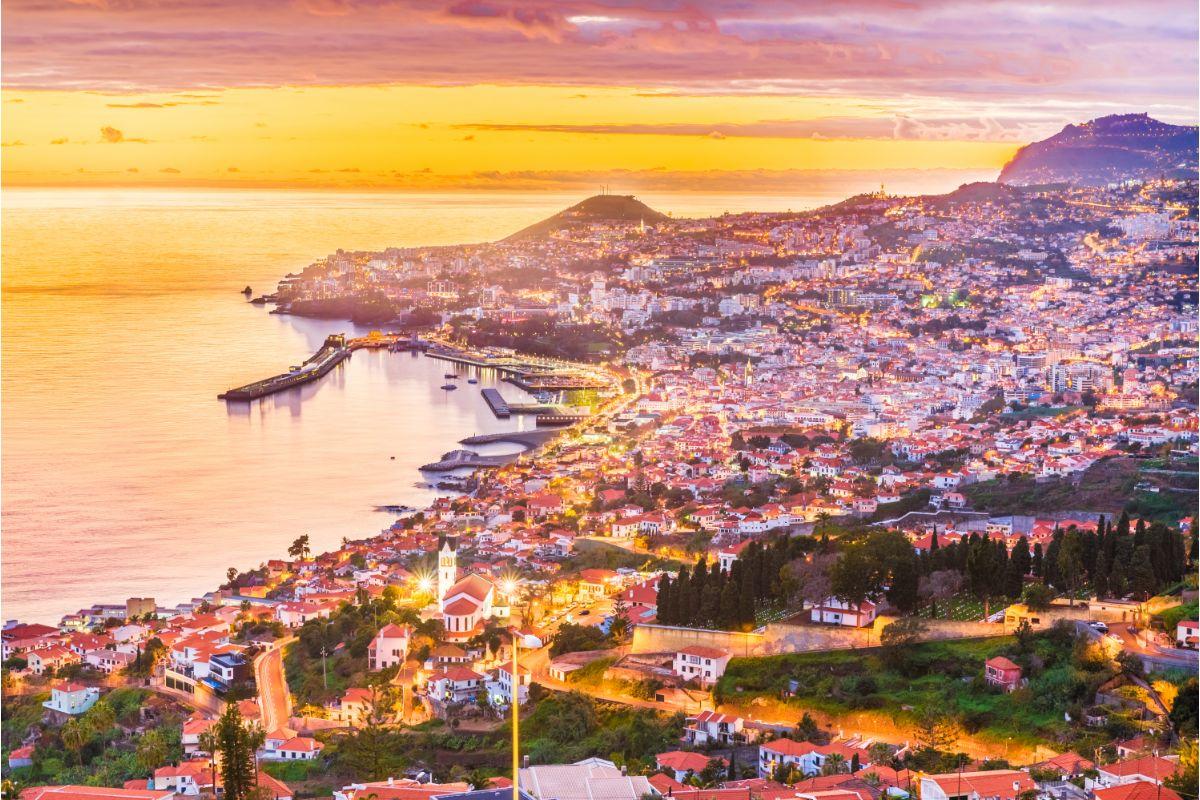
If you are looking for white sandy beaches and typical beach activities, Madeira is probably not the right destination for you. (Although you can find some lovely sandy beaches nearby!)
But if you love beautiful nature, rugged coastlines, quirky local spots, unique traditions and good food, Madeira is the ideal destination.
What's more, despite its relatively compact size, the island offers more diversity than it first appears. And there's so much to see and do in Madeira that you can easily spend two weeks there without ever getting bored!
In this article we share all the most popular sites, activities and tourist attractions in Madeira that are considered must-sees.
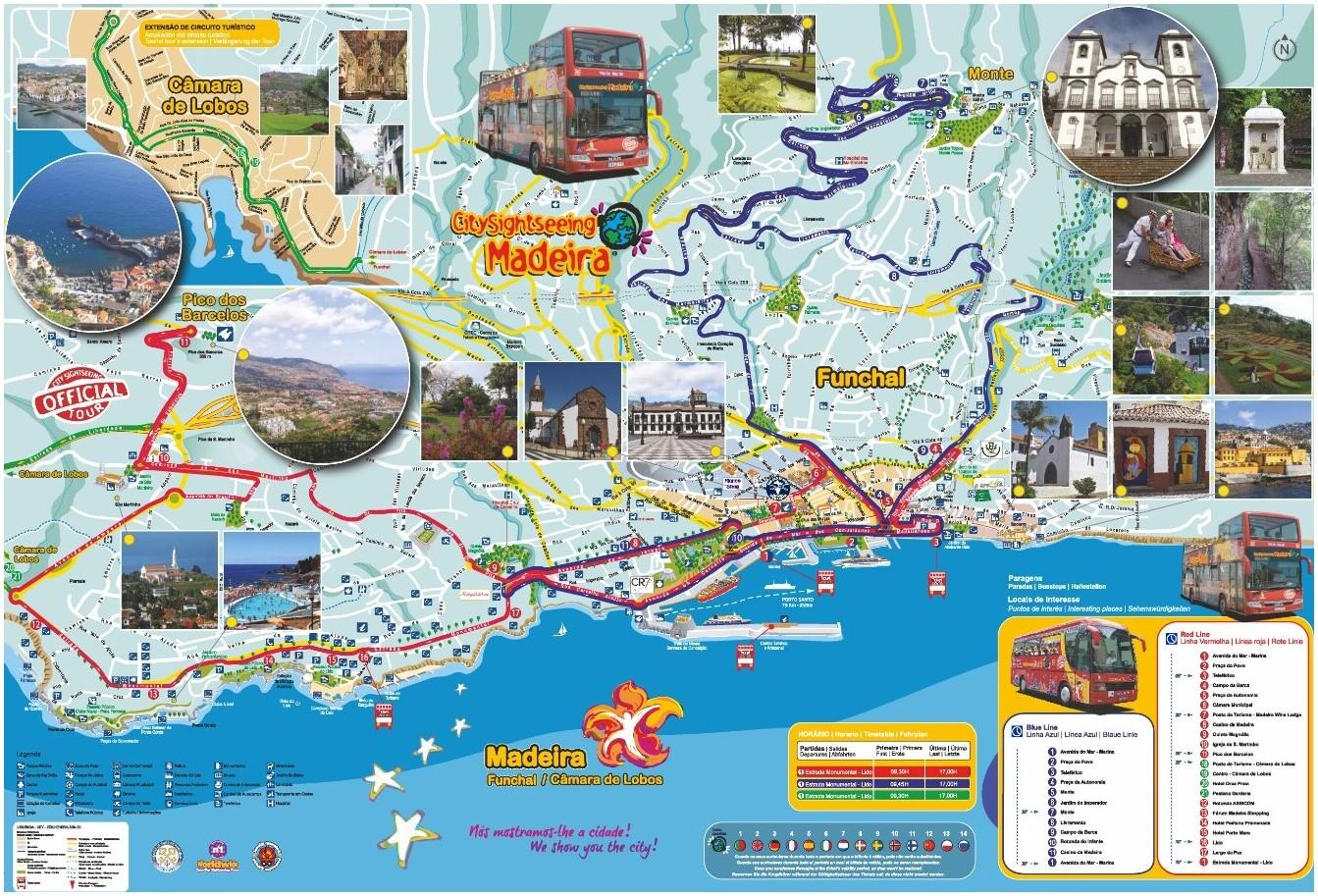
For each location/activity, we also include our tips to help you make the most of your visit. To help you plan your trip, we've also created a map of Madeira's most beautiful places. It should give you a better idea of where everything is and make it easier for you to plan your time.
Tourist map
Accommodation
If you don't hire a car, stay in Funchal. It has the best transport links and most organised tours start here. Some of the finest resorts, such as the Pestana CR7, the Savoy Palace and many others, are located to the west of the city. But there are also plenty of nice hotels and accommodation in the old town (like the Vine Hotel or the Cathedral Hotel, etc.). It really depends on the type of holiday you are planning.
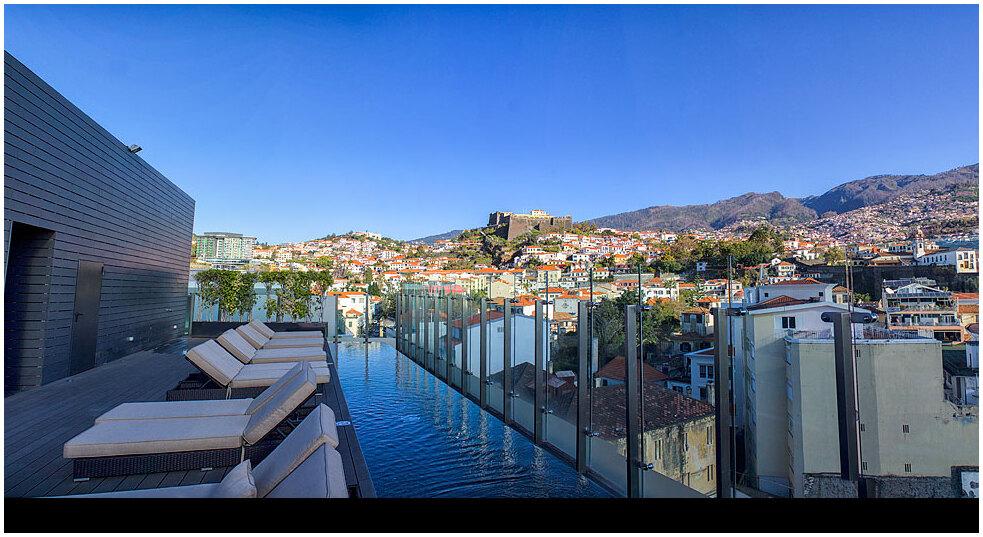
If you have a car, you can do a sort of road trip and stay in two or three different places on the island. However, the distances aren't great and it's not really necessary. If you choose to stay in just one place, we advise you to stay on the south coast.
In the south, pretty much everything between Caniço and Calheta Beach is good. But if you want to get everywhere quickly, the area around Funchal and near the motorway is still one of the best places.
General advice
These days, tourists prefer to organise their holidays themselves, choosing a hotel that suits them rather than accepting the one the tour operator uses. But choosing accommodation is not as easy as it seems. An Internet search for hotels in your destination will give you literally thousands of results, most of them from review sites. And since anyone can write a review of a hotel (the hotelier, his friends, his competitors), you need to be very careful because the review you read about the hotel you're interested in may be pure fiction.
There are genuine reviews, but in general, you should ignore both praise and criticism. Dealing directly with a hotel or its appointed representative is the best choice, because you know exactly who you're buying from. And if you find a cheaper deal for the same room, chances are the hotel will match it. After all, it's their reputation and they want you to come back, so they'll treat you like a valued guest rather than a number on a coupon.
Monuments and architecture
Each of Madeira's towns has a multitude of unique sites and sights. To take full advantage of the island's beauty and cultural traditions, travellers should take a general tour of the main towns and enjoy the historic sites. The island's capital, the city of Funchal, attracts most tourists because its territory has preserved a large number of palaces and ancient squares. The capital's main attraction is the Franciscan monastery, built in the sixteenth century.
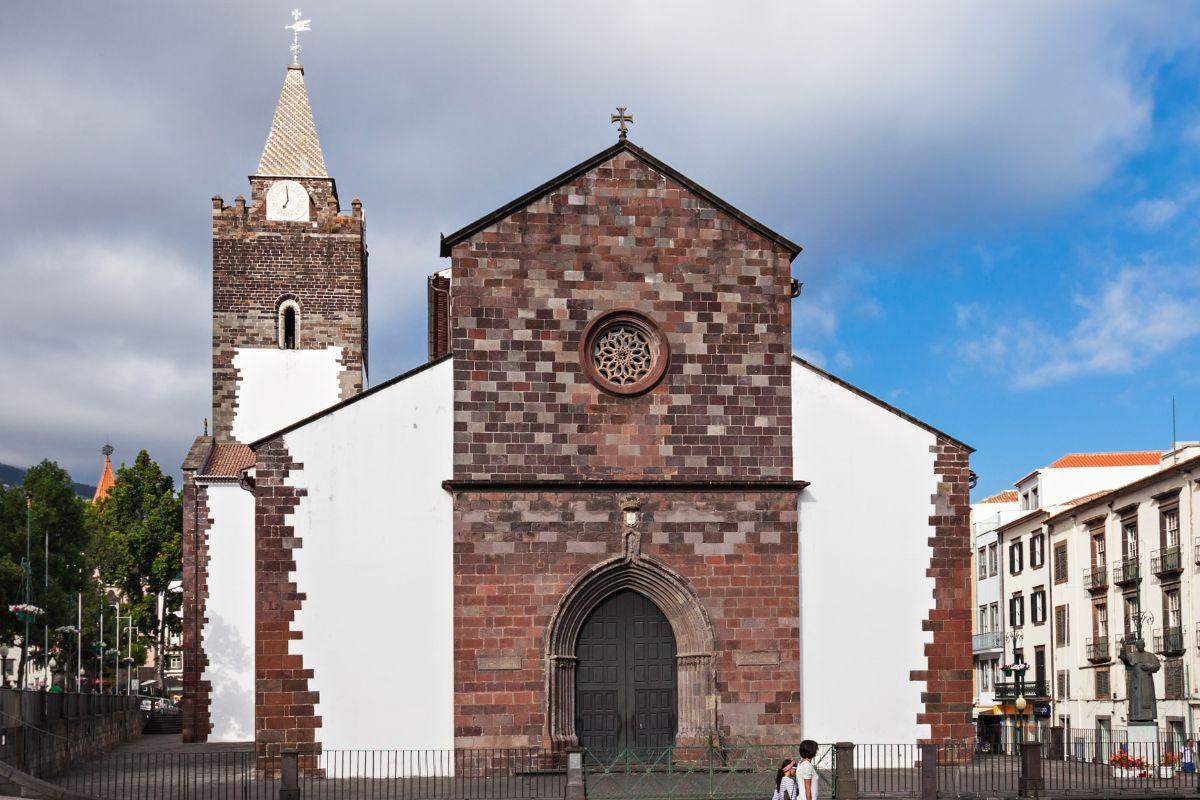
The cathedral of Se, built from blocks of lava, the old fish market, the church of Santa Clara and the picturesque gardens are all sights worth seeing in the capital.
The northern part of the island is home to a small village, Santana. A visit to the village will be of great interest to travellers keen to learn more about the culture and way of life of the local people. Picturesque streets with characteristic ethnic houses, small squares surrounded by fragrant flowerbeds and beautiful gardens create an atmosphere of harmony and peace in Santana.
Gastronomy
Madeira is a gastronomic paradise for tourists who love seafood and exotic fruits. Local restaurants will delight their customers with incredible food masterpieces based on crabmeat and shellfish. Lovers of fish dishes should try the spicy tuna and swordfish. Local desserts will appeal to those with a healthy diet, as they are mainly made from fresh fruit.
Locals grow bananas, mangoes, avocados, grapes and oranges on the vast, fertile andosol plantations. Travellers will find the vast choice of fresh fruit in Madeira's colourful marketplaces. Starters are popular in restaurants serving ethnic cuisine. One of the most popular of these is considered to be the sopa de tomate e cebola. This soup is made with fresh tomatoes, onions and eggs. This delicacy tastes incredible.
The locals' favourite dish is Asorda soup, made with bread, eggs, garlic, spices and olive oil. Asorda soup is the best way for tourists to try authentic ethnic dishes. Although the heart of ethnic cuisine is seafood and vegetable soups, local restaurants offer a good selection of meat dishes.
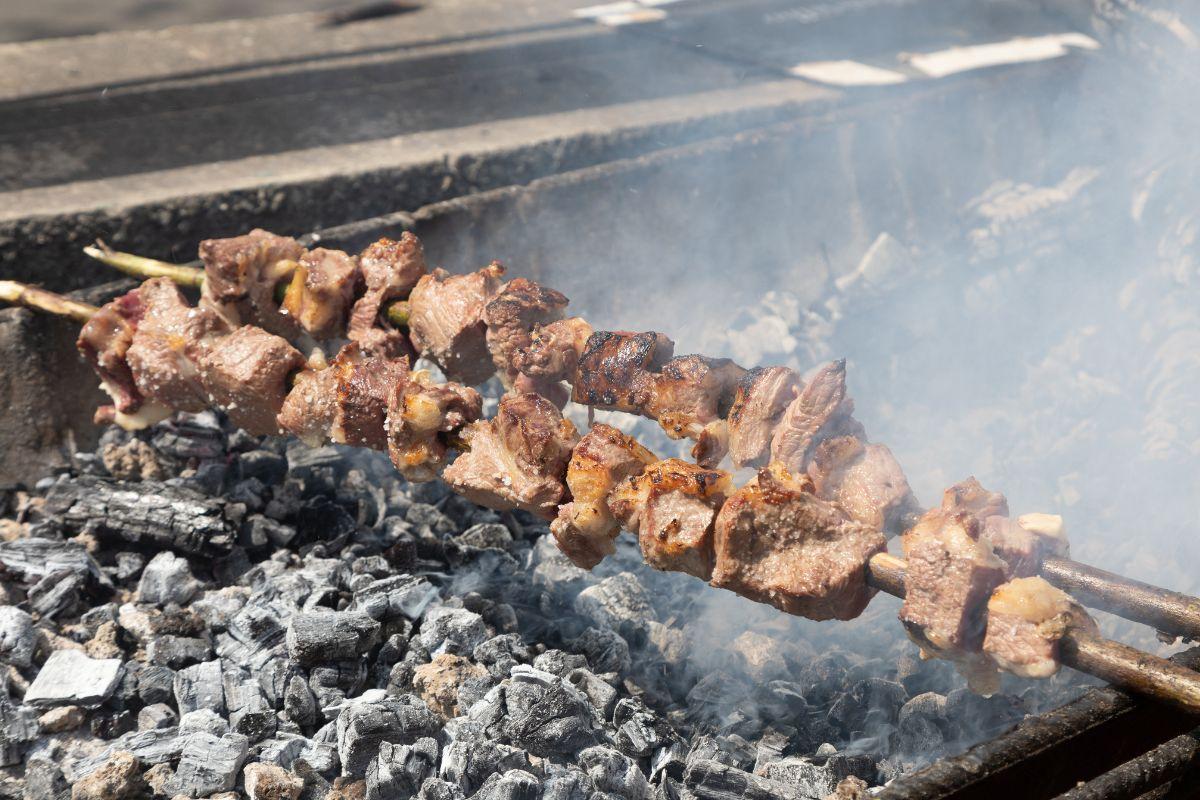
Many cooks prefer to stick to old recipes when preparing meat dishes. Dishes are cooked over an open fire or simply grilled. Kebab is very popular with tourists. Experienced chefs use bay sticks instead of skewers to roast the meat. You must try the grilled beef espetada, carefully heated with garlic and salt. As well as fish and meat dishes, visitors to the local restaurants can enjoy fresh salads.
Ethnic vegetable dishes will be of great interest to lovers of European cuisine. The dishes are made with simple ingredients that are familiar to Europeans. Fresh tomatoes and onions, carrots and squash, broad beans and aromatic spices are the main components of the main vegetable salads.
Read also: Madeira cuisine: 18 delicious dishes you must try!
Top 20 things to do and places to see in Madeira
Funchal
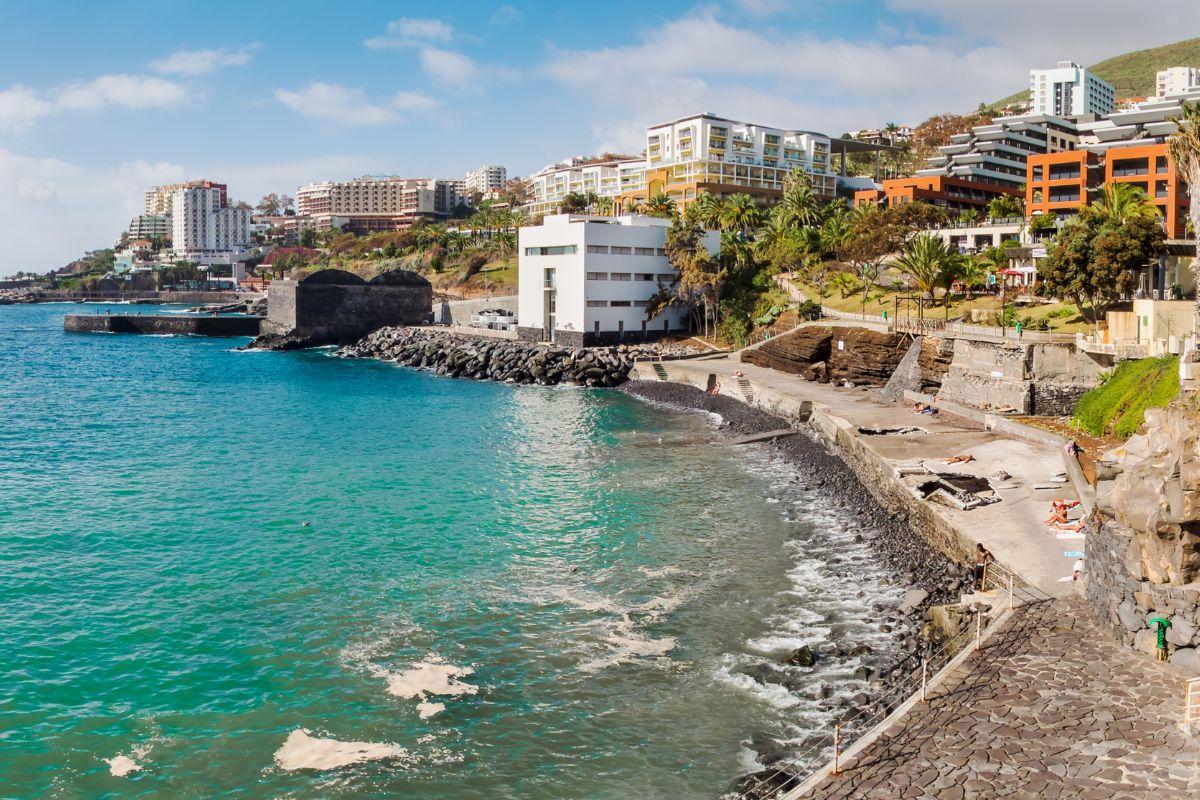
Madeira's capital, Funchal, is an attractive coastal town that is not to be missed when visiting the island. Rather compact in size, there's a lot more to it than meets the eye, and you can easily explore the main sights on foot.
Funchal is a city made for strolling, with pretty black and white mosaic pavements, colonial-style buildings and a lively marina. It's also a green city with colourful parks and gardens such as the Monte Palace Tropical Garden and the Madeira Botanical Gardens.
You'll find a diverse range of interesting and historic attractions, including the Cathedral (Sé), the Convent of Santa Clara or the iconic wicker slide tower, one of Madeira's most popular tourist attractions. Football fans will definitely want to visit Cristiano Ronaldo's trophy museum, the CR7, and if you like street art, be sure to visit the Rua de Santa Maria.
TIP: Try to plan your visit to Funchal when there are no (or not too many) cruise ships in town. The small town becomes very lively when several cruise ships are in port for the day.
Good to know: We cover the main sights in and around the town in more detail below (many of which are definitely worth seeing and doing in Madeira).
Read also: What to do in Funchal, 15 must-sees
Mercado dos Lavradores
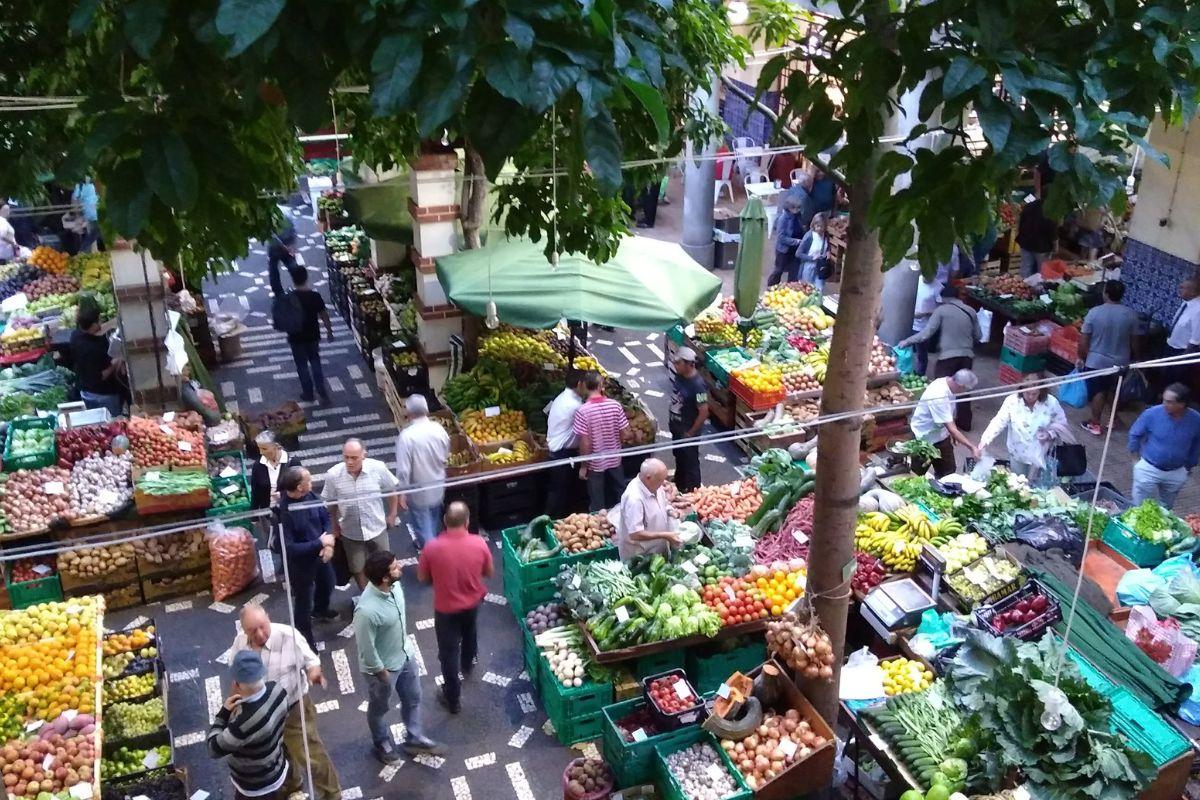
The Mercado dos Lavradores (Farmers' Market) is a lively local market located in the centre of Funchal, just a short walk from the seafront and the main tourist attractions. This traditional market is considered one of Madeira's must-sees. And indeed, it's a unique experience.
Built in 1938-1940 by a popular Portuguese architect, Edmundo Tavares, the building is interesting to see in its own right. The two-storey open hall is built in the art deco style and decorated with Portuguese azulejo tiles.
On the ground floor, you'll find flower sellers in traditional dress and fruit stalls selling a myriad of colourful produce. On the top floor, you'll find stalls selling dried fruit, vegetables and spices. If you're visiting early in the day, check out the fish market - Praça do Peixe - behind the farmers' market. The two markets are linked by a wide staircase.
Good to know: The Mercado dos Lavradores is open from morning to night every day except Sunday. On Saturdays, it closes in the early afternoon. The best days to visit are Fridays and Saturday mornings.
TIP: The Mercado Dos Lavradores is a great place to sample exotic and interesting foods. Some are so special that you'll never see them anywhere else. However, if you're looking for big-ticket groceries, prices are lower in nearby supermarkets.
Cabo Girão
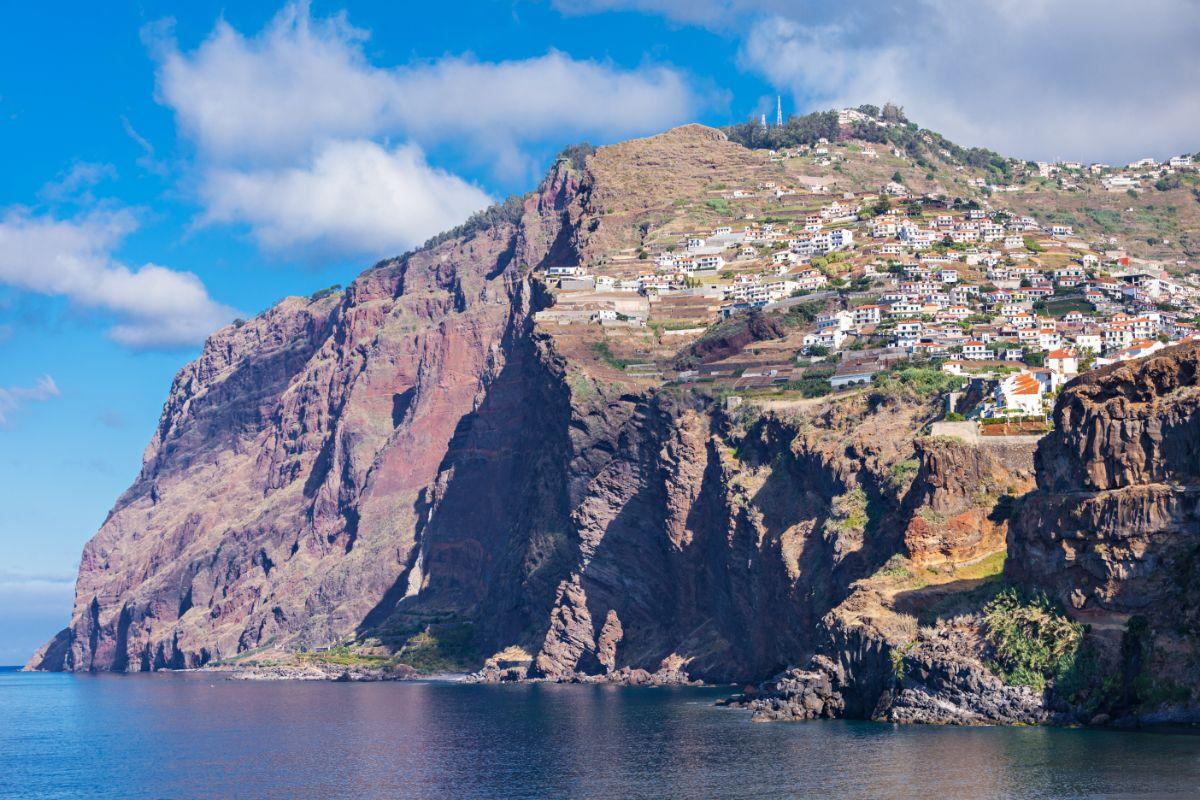
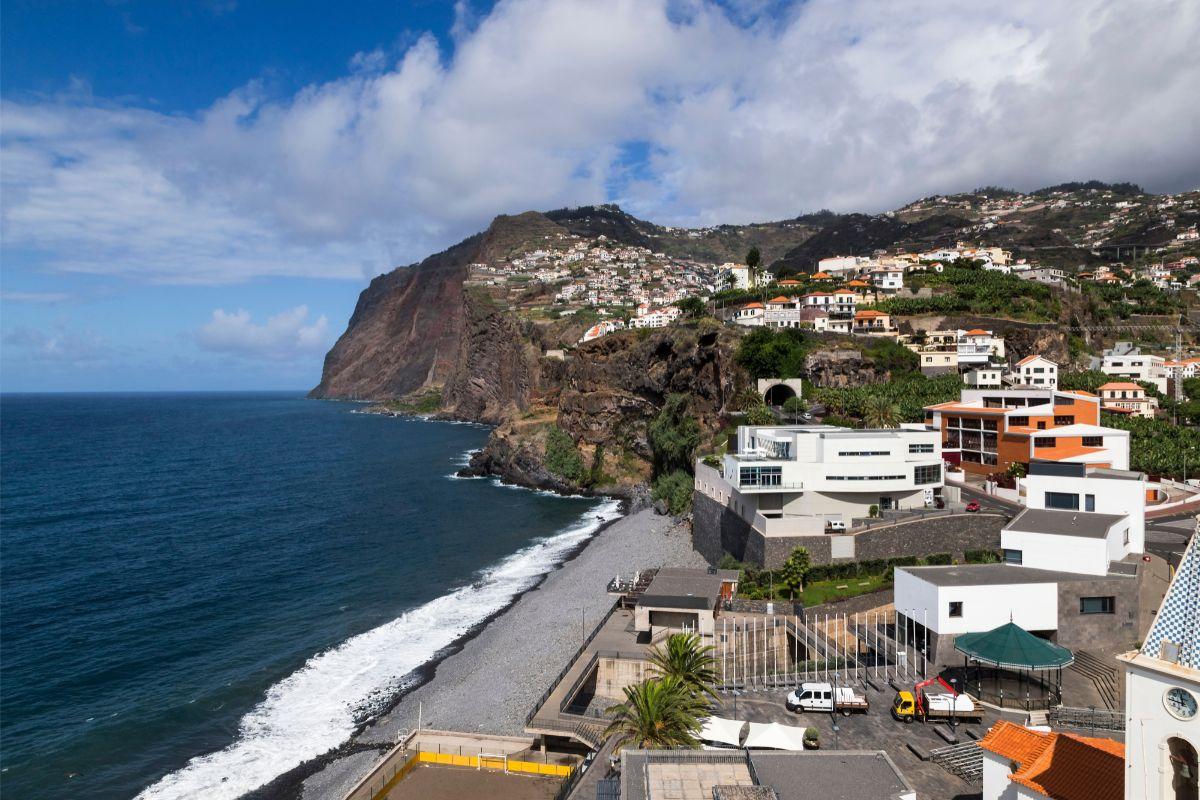
Cabo Girão just outside Funchal is one of the most popular places to see in Maderia. It is one of the highest sea cliffs in Europe, rising 580 metres (1,900 feet) above sea level. On a clear day, the view from the Miradouro do Cabo Girão is spectacular, but what makes it even more special is the observation platform itself.
As well as the paved terrace, there is also a suspended platform with a glass floor that juts out over the edge of the cliffs, the Cabo Girao Skywalk. It's really special to see the sheer cliffs right beneath your feet! If you're afraid of heights and prefer not to walk on the glass, you can simply view it from the side.
Interesting fact: from the viewpoint, you can see small hectares of land at the very bottom of the cliffs, by the sea. In the not so distant past, local farmers would descend the cliffs in baskets to work this land. Today, this dangerous undertaking no longer poses any risks.
Good to know: Access to the observation areas is free but can be very busy when arriving on a coach tour. In high season, turnstiles at the entrance are used to control the number of people on the platforms. You may have to wait your turn, but the view is well worth it.
TIP: Visit Cabo Girao early in the morning or in the evening. It will be quieter and easier to find parking in the limited space available. What's more, the roads around Cabo Girao are narrow and winding. If you're travelling by car, you may not be comfortable meeting an oncoming coach!
Getting there: Cabo Girao is a 20-minute drive from Funchal. If you don't have a car, you can take a public bus that stops outside the entrance. The hop-on hop-off bus from Funchal also stops here. Many organised tours that visit the interior or west side of the island also stop here, and some boat tours pass underneath.
Câmara de Lobos
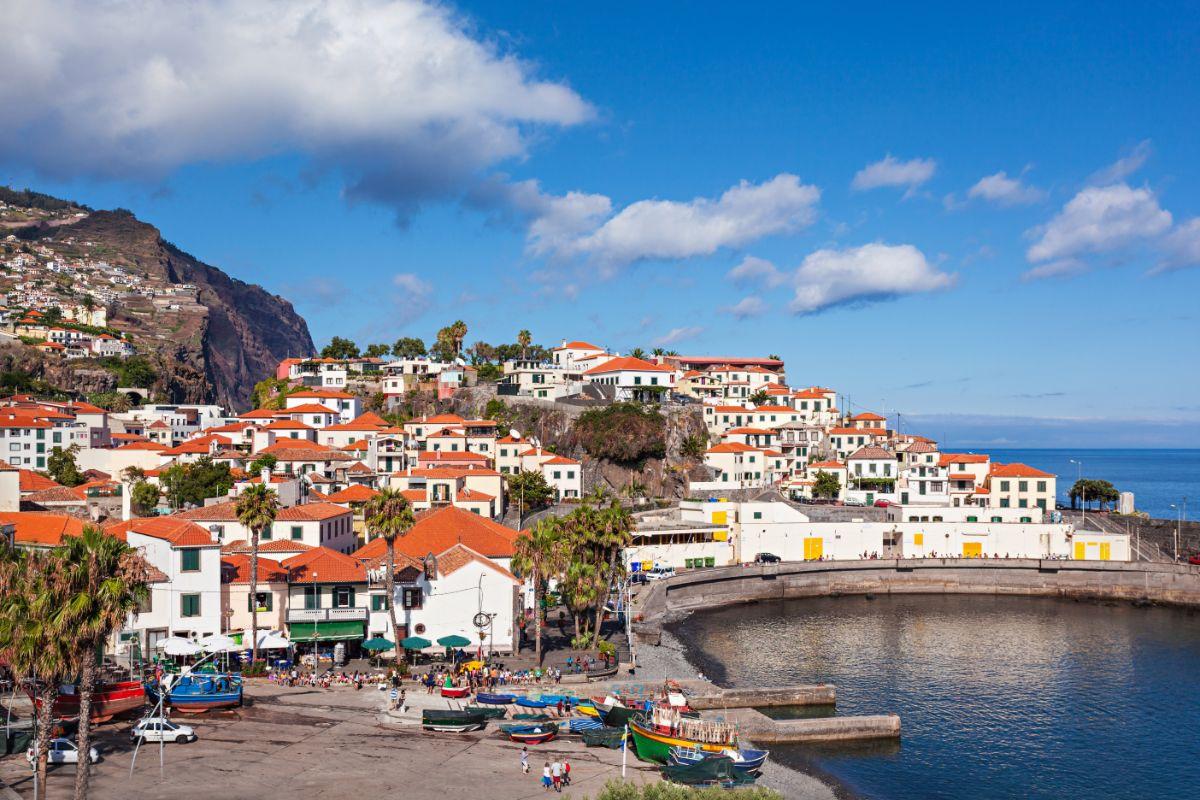
Another popular destination to visit in Madeira is the fishing district of Câmara de Lobos, also a 10-15 minute drive from Funchal. This picturesque little port is one of the best places in Madeira where you can find the authentic feel of a small village. At the same time, it's a lively place with a few restaurants and cafés, and live music at weekends.
When you walk along the small seafront, you can usually see many colourful boats and sometimes fish hanging out to dry. Traditionally, fishermen go out to sea at night to catch swordfish and small-spotted catfish. During the day, you'll see the locals working on their boats, preparing fishing nets and playing cards.
Be sure to visit the Miradouro Winston Churchill, a lovely viewpoint overlooking the harbour where the British Prime Minister liked to paint during his holidays in Madeira. His Rolls Royce would take him to this viewpoint from the nearby Reid's Palace Hotel, where he would sit and paint the landscape for hours. You can see a small plaque with an inscription that says "Here painted Winston Churchill in 1950".
There's also a small 15th-century chapel - Capela de Nossa Senhora da Conceição - dating from the time the island was discovered.
Good to know: Câmara de Lobos is easily accessible from Funchal by car, but also by hop-on-hop-off bus. As a result, the village can sometimes be very busy with tourists, especially in high season and when there are many cruise ships in Funchal.
TIP: There are plenty of cafés in town where you can come for lunch. For good fresh fish and a great view, go to Restaurante Coral or Restaurante Praia do Vigário. Both are located on the oceanfront to the west of the city.
Ponta de São Lourenço
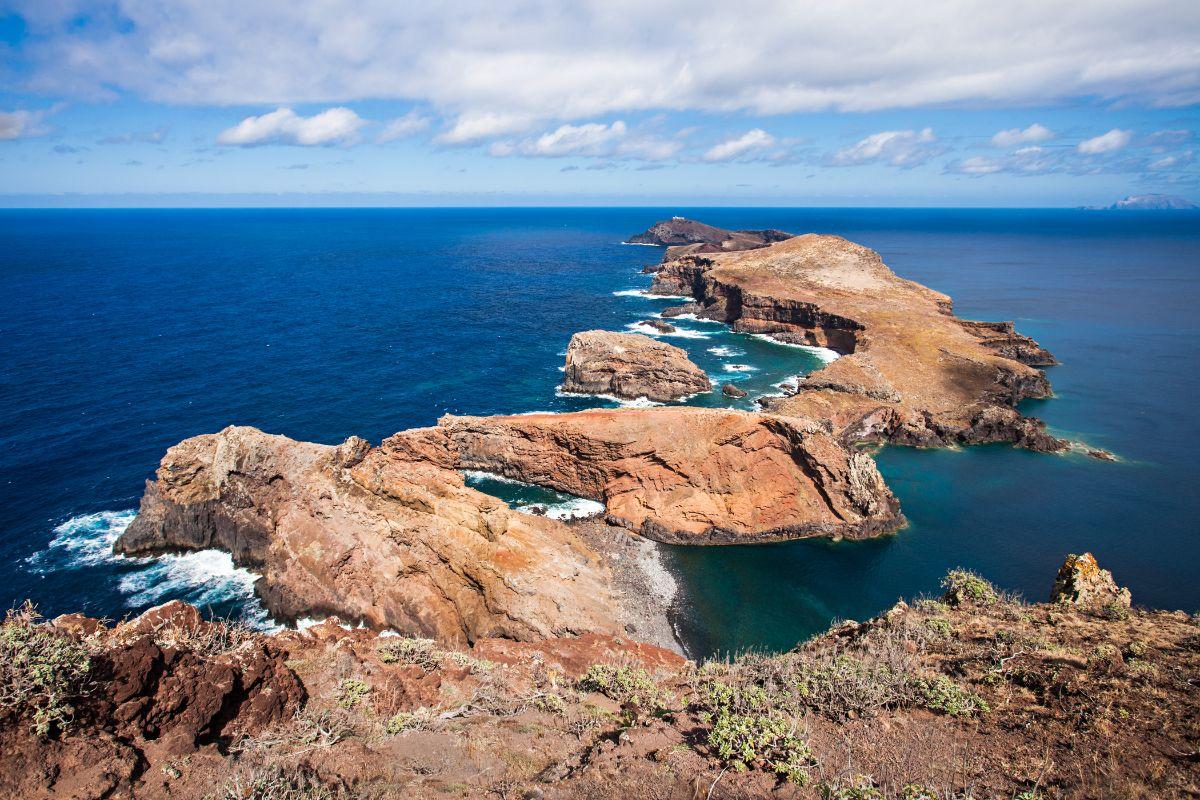
Madeira is famous for its countless hiking opportunities. The Vereda da Ponta do São Lourenço is one of the most rewarding hikes, with breathtaking scenery.
While most hikes in Madeira are inland levada walks, the 8 km Ponta de São Lourenço hike is a coastal path. This hilly route winds around the eastern peninsula near Caniçal and culminates at the spectacular viewpoint of Ponta Do Furado. The scenery here is absolutely stunning! And even if you only do the first part of the trail - to the mirador at São Lourenço (+-20-30 minute walk from the car) - it's absolutely worth it.
Gettingthere: Ponta de São Lourenço is the most easterly point on Madeira Island, about half an hour's drive from Funchal. There is free parking at the start of the path. If you don't have a car, you can take a bus. Alternatively, there are organised tours that can take you here from Funchal.
TIP: Arrive early as the small car park fills up quickly and the narrow footpaths are very busy. Bring drinks and snacks as there are no facilities on the walk. Also expect a lot of wind.
Monte Cable Car
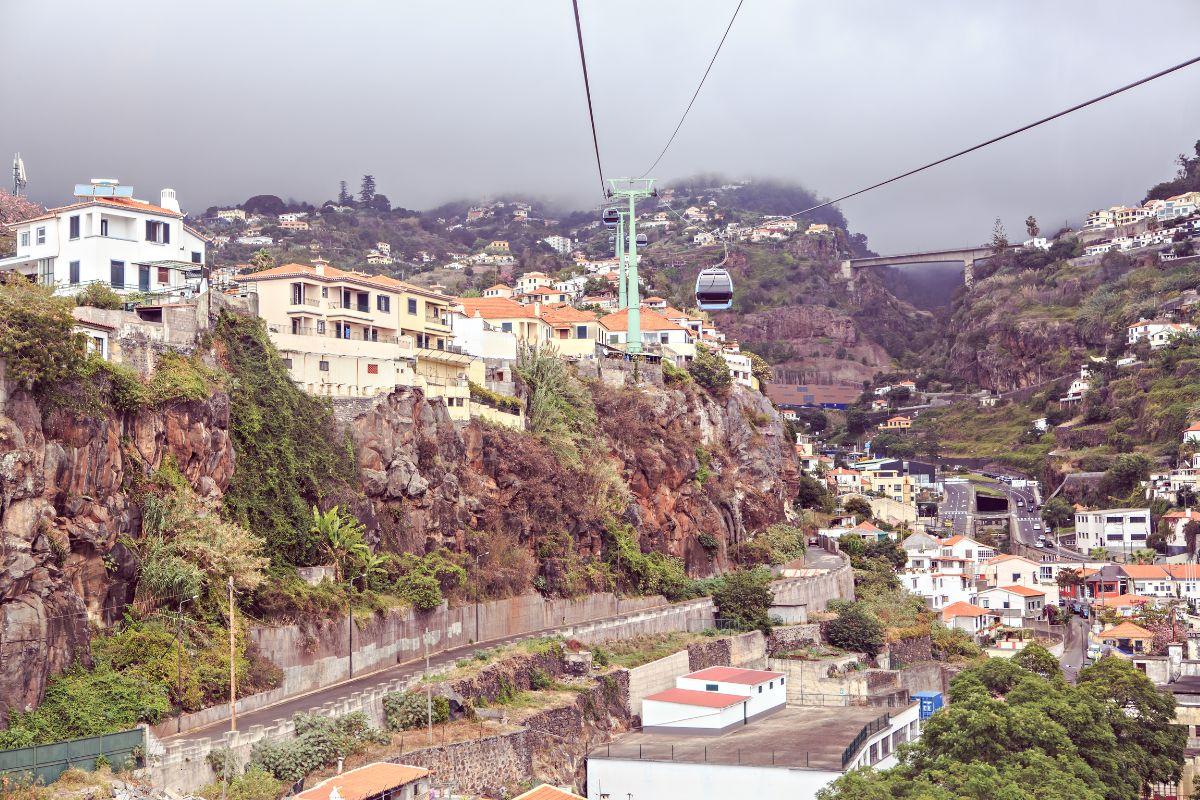
One of the most popular things to do in Madeira is to visit the village of Monte, located above the town of Funchal. And the best way to get there is by Monte cable car (Teleférico do Funchal). There are many nice places to visit, but the cable car ride up the mountain is an attraction in itself. The views over the city and port are truly spectacular. The cable car covers a fairly long distance and the journey takes around 15-20 minutes. So you've got plenty of time to take in the beautiful views of Funchal and the surrounding area.
Practical information: The Monte cable car runs every day from 9am to 5.45pm (times may vary in high season). You can also normally buy tickets on the spot. You can opt for a one-way ticket, a return ticket or combined tickets with a cable car for Madeira's Botanical Gardens.
Jardim Tropical Monte Palace
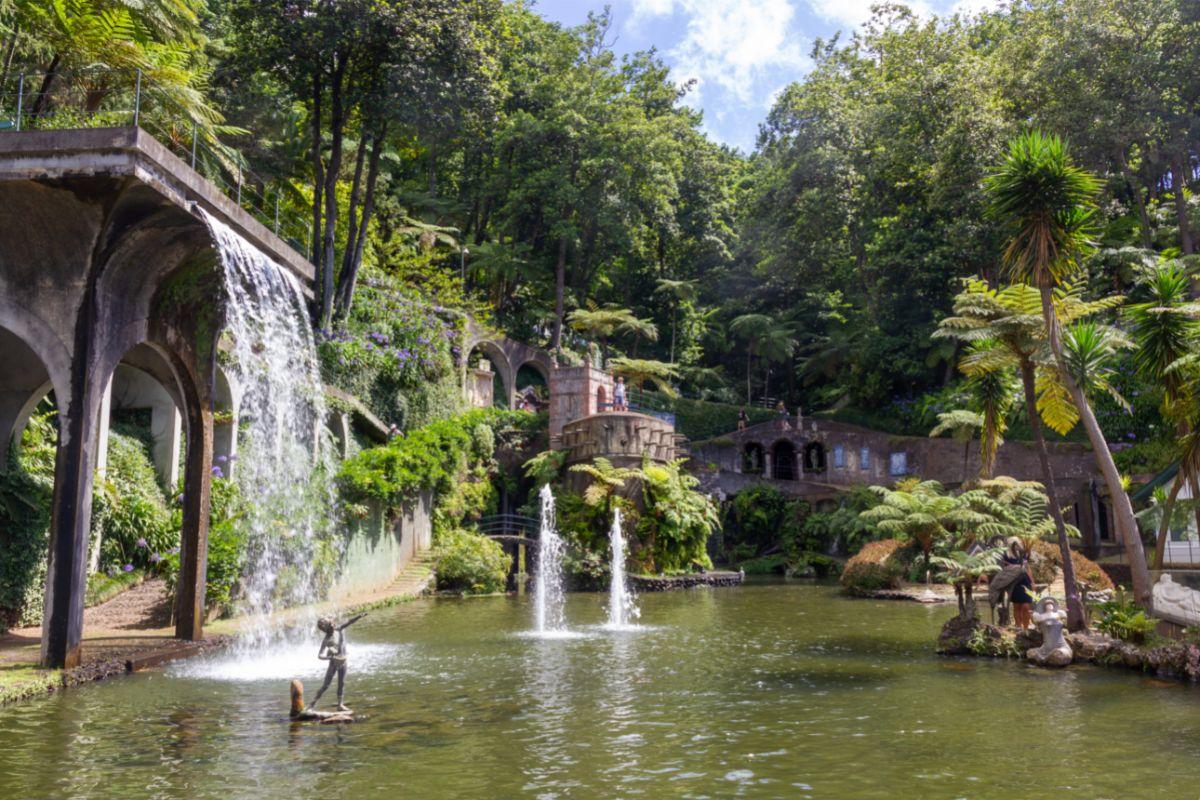
Jardim Tropical Monte Palace is one of Madeira's most beautiful gardens. Located around a former pleasure estate and then luxury hotel, the Quinta Monte Palace (now a museum), the tropical gardens are home to exotic plants from all over the world and rare species native to Madeira Island.
Created in the late 1980s by local entrepreneur and philanthropist Joe Berardo, the gardens contain an eclectic mix of trees, flowers, fountains, ponds, waterfalls, azulejos, statues and Japanese-themed gardens with pagodas and carp ponds. Modern sculptures and a large collection of 15th-20th century tile panels depicting the history of Portugal make the visit even more interesting.
The gardens of the Monte Palace are located above Funchal, in the village of Monte. On a clear day, there are fantastic views over the city and the Atlantic Ocean.
How do you get there? The most popular - and highly recommended - way to get to the gardens is to take the Monte cable car mentioned above. It runs from Funchal city centre to Monte and stops directly in front of the garden entrance. You can also get there by car, but parking is virtually impossible. Alternatively, you can take a taxi and there is also a public bus.
Practical information: The gardens are open every day of the year, except Christmas Day. Children under 15 are free with a paying adult. Please note that the gardens are quite large and some paths can be slippery. Please be prepared to walk and wear suitable footwear.
TIP: You can take a one-way cable car ticket and return to the outskirts of Funchal on a traditional wicker slide from Monte.
Traditional wicker slide
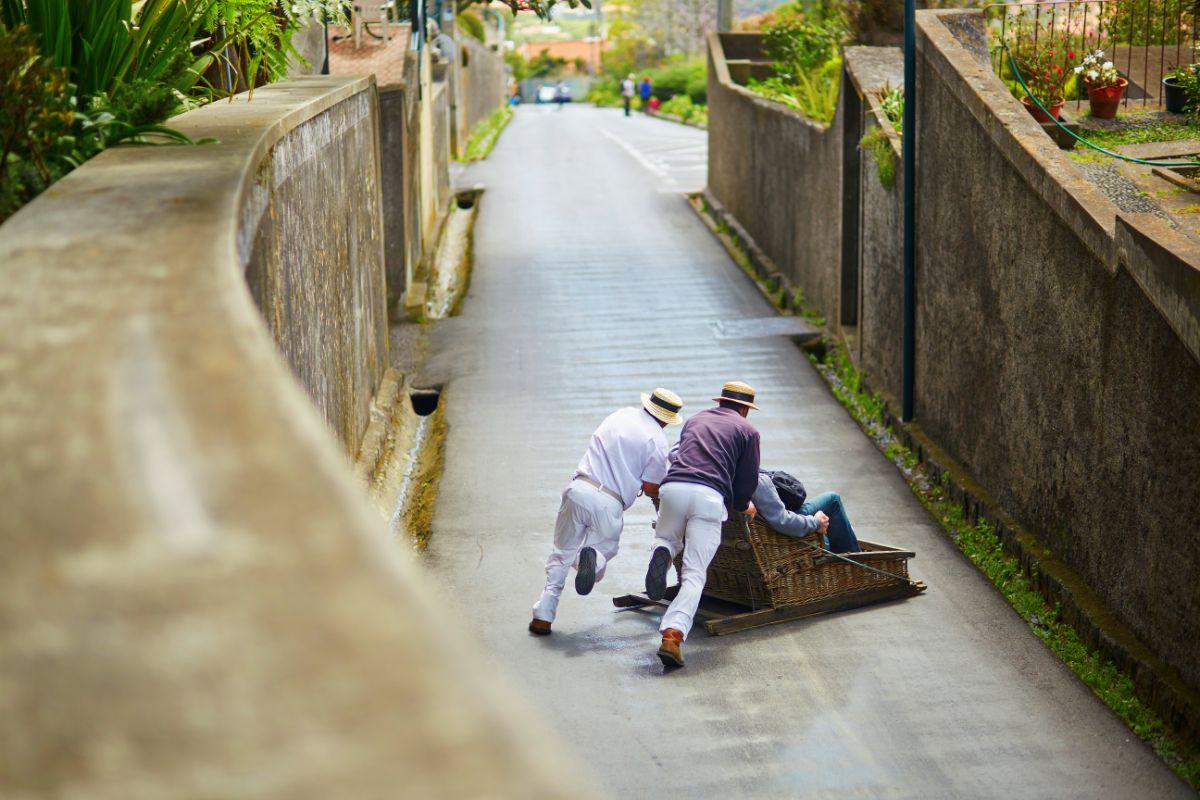
The wicker basket toboggan ride (also known as the Monte wicker basket toboggan) is an old Madeiran tradition dating back to the late 19th and early 20th centuries. In the past, locals used it as a means of transport to get quickly from the village of Monte to Funchal. Nowadays, it's only used to entertain tourists.
And indeed, a traditional wicker slide ride is one of Madeira's most popular tourist attractions. The slides can accommodate two people (or three, if one of them is a child) and are steered by two riders. So all you have to do is sit back and enjoy the wild ride through the narrow streets.
One thing you can be sure of: this is something truly unique that you can only do in Madeira and that you won't find anywhere else in the world.
Practical information: The wicker sledge ride starts near the Church of Our Lady of Monte, a few steps from the aforementioned Jardim Tropical Monte Palace. You simply pay a fixed price to the drivers and there's no need to organise anything in advance. The journey down takes about 10 minutes and takes you to Livramento, so not to Funchal. From there, you'll either have to walk into the city centre or take a fairly expensive taxi.
TIP: If you decide to go tobogganing, make sure you visit everything you want to see in Monte first - that way you won't have to walk back up the hill afterwards. Also bear this in mind when deciding whether you need a return ticket for the cable car.
Good to know: There are organised excursions on Madeira Island that also include Monte and the wicker slide experience in their itinerary. This is one of the best options - a half-day excursion that visits the Nun's Valley, Monte, and includes a sleigh ride.
Jardim Botânico - Madeira Botanical Garden
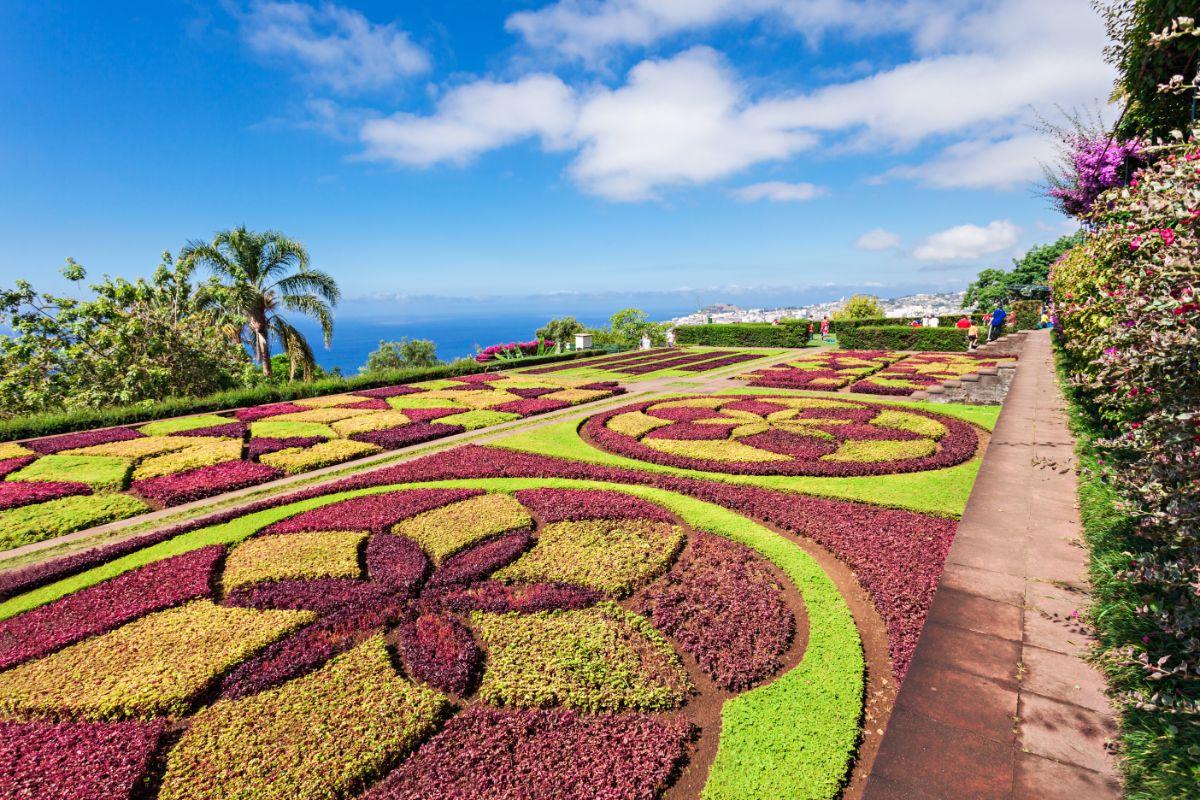
The Madeira Botanical Garden is another beautiful garden to visit in Madeira. As it's a little more difficult to get to, it's not as popular as the Jardim Tropical Monte Palace mentioned above.
This 5-hectare garden is home to thousands of species of plants from all over the world, beautifully landscaped flowerbeds, an exotic bird park, and there is also a small natural history museum.
The gardens are divided into zones, such as the arboretum and medicinal plants. This is a fascinating place to visit for botany enthusiasts, as each plant is labelled. The gardens are well worth a visit all year round, but are at their most colourful in spring and summer.
TIP: The most impressive (and most photographed) section is the geometric topiary garden, with its colourful flowers and beautiful views over Funchal and the surrounding area.
Practical information: The Madeira Botanical Garden is open every day, except Christmas, from 9am to 6pm. Children under 6 are free.
How to get there: Jardim Botânico is located outside Funchal and you will need a car or taxi to get there. Parking is available, but this depends on how busy it is. You can also take a public bus or cable car from Monte Carlo.
Pico do Arieiro
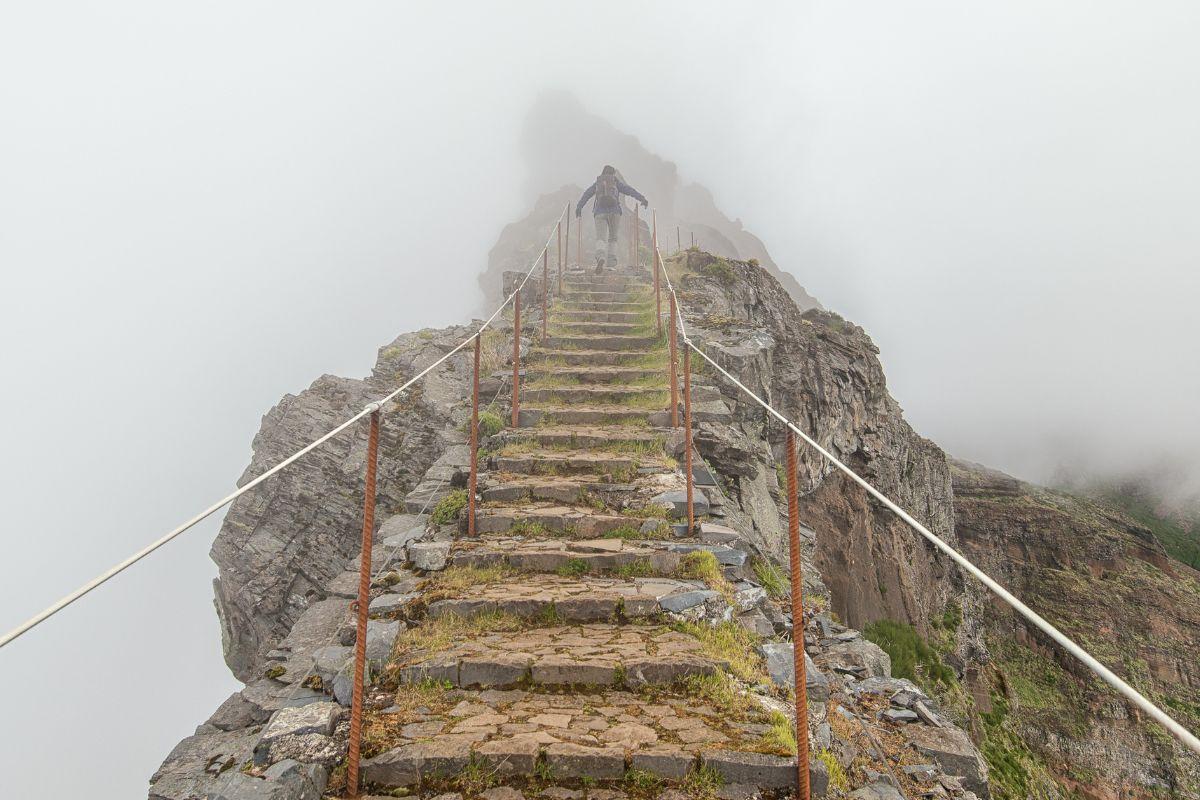
Pico do Areeiro (or Pico do Arieiro) is one of Madeira's highest mountains (1,818 m - 5,964 ft). Easily accessible by car, it is the most popular peak to visit in Madeira. The road to the summit is quite winding, but tourist buses also come here, so it can get quite busy during the day.
From the car park it's just a short walk to the summit, which offers fantastic views. It's also a popular place to watch the sunrise or sunset.
One of Madeira' s most beautiful walks - Vereda do Areeiro - starts here and takes you to Pico Ruivo, the highest mountain on the island (more information below). If you're looking for the best views in Madeira, there's no better place!
It's a fairly strenuous and elevated trail, 7 km on the outward journey and 5.6 km on the return if you do a loop (making a total of around 12-14 km depending on the route you choose). There are steep slopes on both sides of the trail, so this hike is not for the faint-hearted.
TIP: You don't have to do the whole hike to enjoy the best views. Even if you only walk 15 to 30 minutes from the car park, you'll see some amazing landscapes and magnificent views that will make you feel like you're on another planet. Without a doubt, this is one of the best places to see in Madeira!
Getting there: You'll need a car (or an excursion) to get to Miradouro Pico do Arieiro. If you're driving, make sure you get there early - the car park tends to fill up quickly. Alternatively, if you're not planning to do the whole hike, come here in the afternoon or for sunset.
TIP: If you don't have a car, or if you want to do the whole hike without having to return to the same point, you can join one of Funchal's walking tours. They organise transport so that you can hike in one direction only - it's much more doable and enjoyable that way.
Practical information: There is a small restaurant at Pico do Areeiro, but no facilities further along the trail. So if you plan to do this hike, make sure you bring plenty of snacks and water. Hiking boots, sun cream and warm clothing are essential. There are tunnels on this hike, so don't forget to bring a torch.
Pico Ruivo
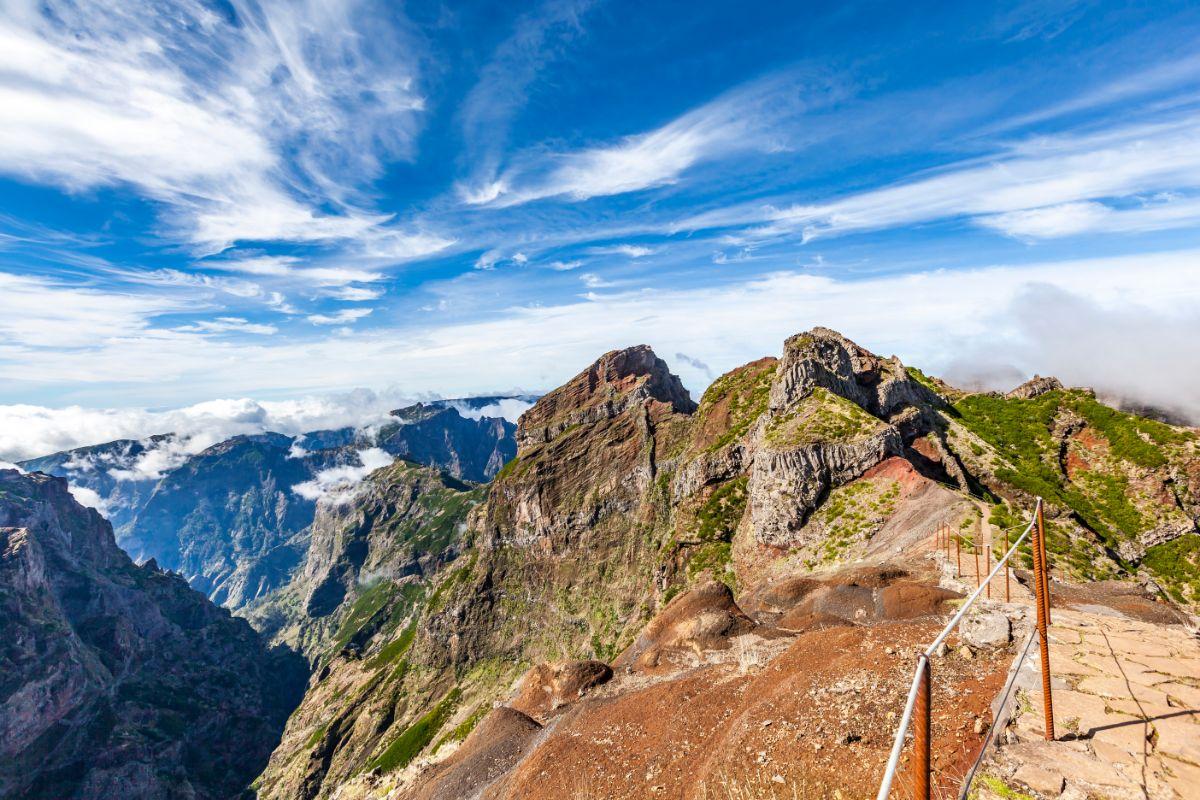
Pico Ruivo is Madeira's highest mountain (1,862 m). It can only be reached on foot from the Pico do Areeiro mentioned above. However, there is also a shorter path - Vereda do Pico Ruivo - from Achada do Teixeira on the other side of the island.
The Vereda do Pico Ruivo is one of Madeira's most famous and spectacular hiking trails. The path takes you among and above the clouds. On a sunny day, you'll be rewarded with a 360-degree view from the summit. Be prepared for lots of walking and sudden weather changes here!
Practical information: The shortest path to Pico Ruivo starts from the Achada do Teixeira car park. It's around 2.8 km long and takes 1.5 hours each way, making a total of around 3 hours. You'll find more information on this trail in our Madeira hiking guide.
How do I get there? You'll need a car to get here. You can also come here as part of a walking tour which includes transfers to/from Funchal. On a tour, you'll hike in one direction and also see the aforementioned Pico do Areeiro. This really is the most efficient way to do this hike, so even if you're renting a car for the rest of your stay in Madeira, we'd still consider doing a circuit if you want to climb these two peaks.
TIP: Bring warm clothing as the temperature drops considerably at this altitude. Also be sure to check the weather forecast for Pico Ruivo before you go, as it may be different from the rest of the island. Even if the sun is shining everywhere else, Pico Ruivo may be covered in clouds. If it is above the clouds, that can be a very special experience too!
Porto Moniz natural pools
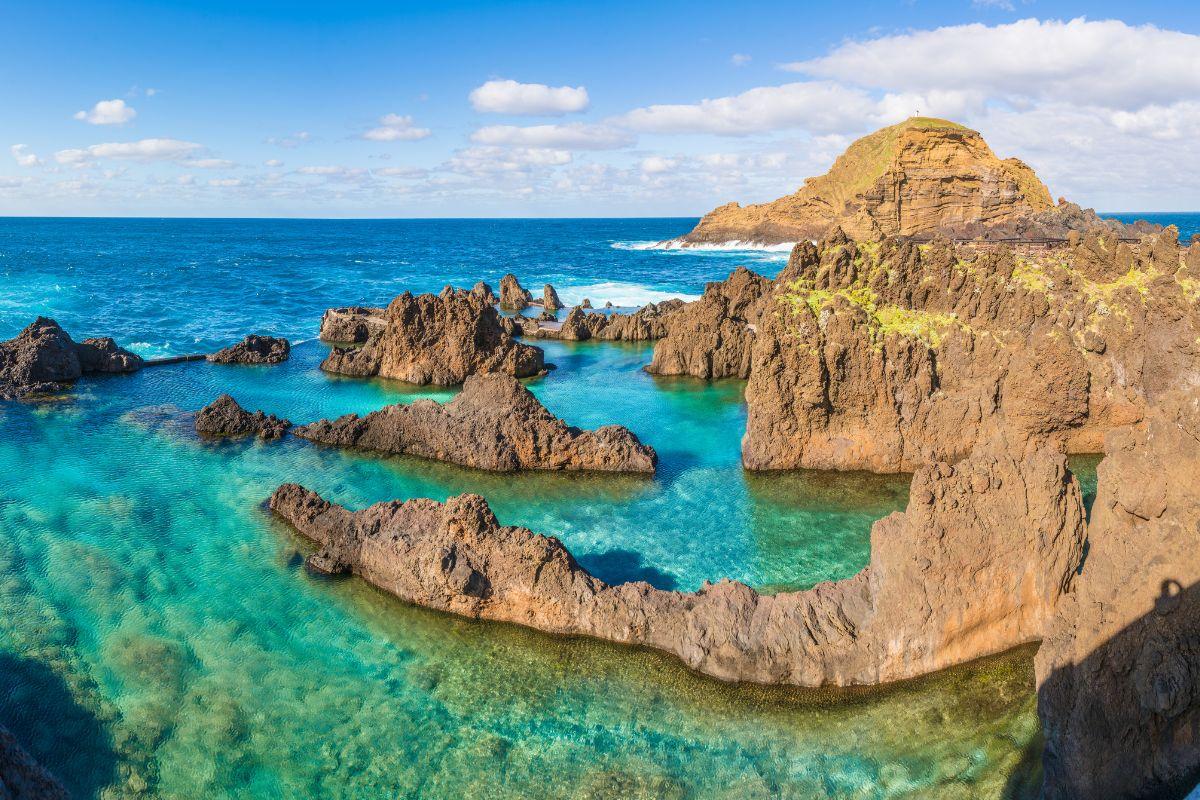
Porto Moniz is a small town on the north-west coast of Madeira. It's best known for its natural volcanic pools, one of the best places to swim in Madeira! And even if you don't go swimming, it's a beautiful area to see, with a very impressive rugged coastline. On a windy day, you can watch the waves for hours.
It's one of the most popular places to visit in Madeira, included in all the tours that visit the west side of the island.
The seawater pools at Porto Moniz are filled by the rising tide, so there's a good chance you'll be swimming with fish here. Some of the town's best pools have been adapted into a magnificent lido complex. These pools are more developed and safer, and are also easier for children to access and swim in. The lido also has toilets, changing rooms and lifeguards on duty.
Swimming in a warm seawater pool against a spectacular volcanic backdrop is a unique experience - what an experience!
As a result, the pools are very busy in high season.
How do you get there? Porto Moniz is an hour's drive from Funchal. As already mentioned, it's also a popular stopping point for day trips around the island, but most tours don't include time for a swim here.
TIP: The natural pools can be too choppy for swimming in bad weather, so take care and don't risk it if the waves are high. Similarly, if you visit the undeveloped pools, we recommend wearing water shoes to protect your feet from the basalt rocks.
Good to know: There's a small aquarium in Porto Moniz - this could be something fun to do if you're visiting Madeira with children. Just a few minutes away you'll also find some of Madeira's most beautiful hidden gems, such as Praia da Ribeira da Janela or Achadas da Cruz. So you can easily spend a whole day in this area.
Levada walks in Rabaçal
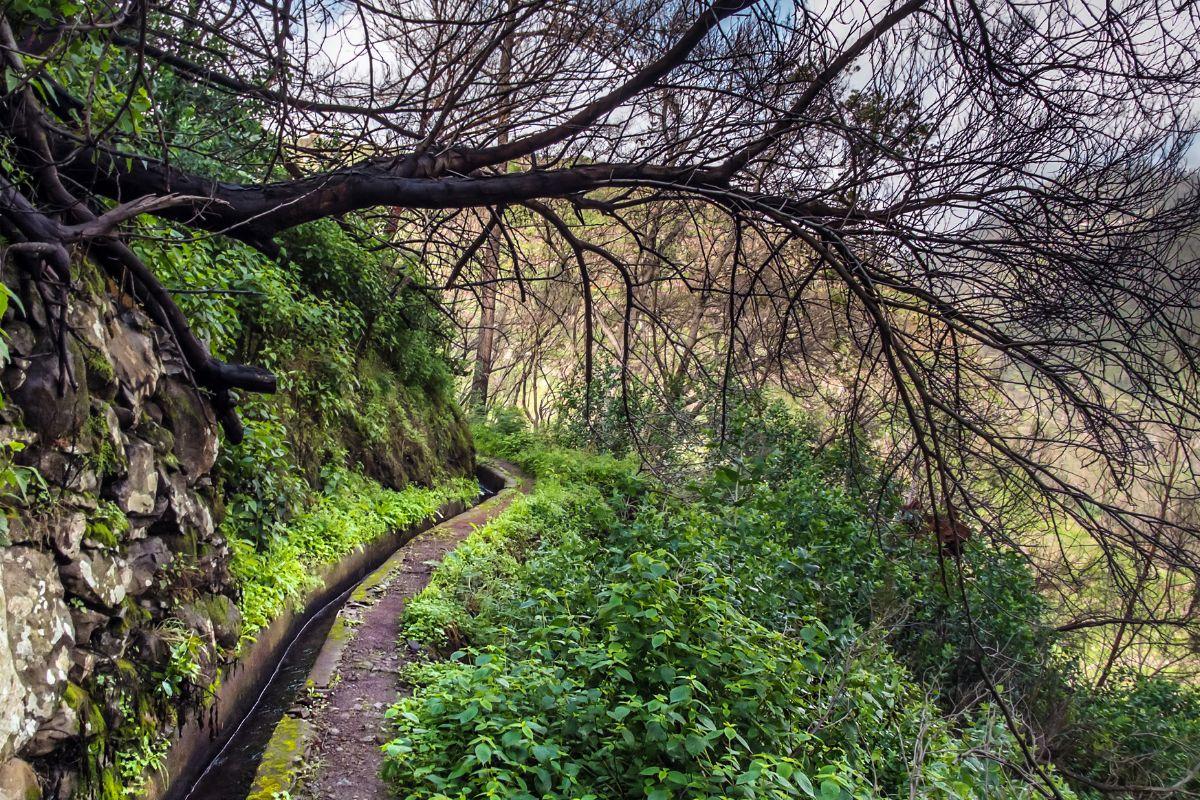
The Rabaçal valley, in western Madeira, is the most popular destination for those who want to do a typical levada hike in Madeira.
Good to know: Levadas are man-made irrigation channels built to supply water from the mountains to communities by the sea. In order to maintain them, narrow paths were created alongside the levadas - these paths are now often used for hiking and take you to spectacular spots in Madeira's hilly interior.
There are several levada walks starting from Rabaçal. The most popular are the Levada das 25 Fontes and the Levada do Risco. You can easily combine these two walks into one - most visitors do.
If you're looking for an easy hike in Madeira, the Levada de Rabaçal trails are perfect. It's also ideal for families as the trail is relatively flat. Expect beautiful scenery, shady forest trails that follow levadas, tunnels and - the main feature of both walks - impressive waterfalls. But the paths can also be muddy and slippery, especially after rain.
Gettingthere: The Rabaçal car park is located on the ER110 road, about a 50-minute drive from Funchal or a 40-minute drive from Porto Moniz. You'll need to drive yourself, take a taxi or join an excursion to get there.
Good to know: Many tourist groups come here because the hike is fairly easy, very rewarding and doesn't require a lot of time. As a result, it's included on many day tours, and some cruise ship excursions go here too. This also means that it can get LOTS busy during the day. If you can, try to arrive early in the morning, or join a small group tour.
TIP: Check the weather forecast for this region before you go. It may be fine and warm on the coast, but you may find thick fog and rain by the time you reach Rabaçal.
Whale and dolphin watching
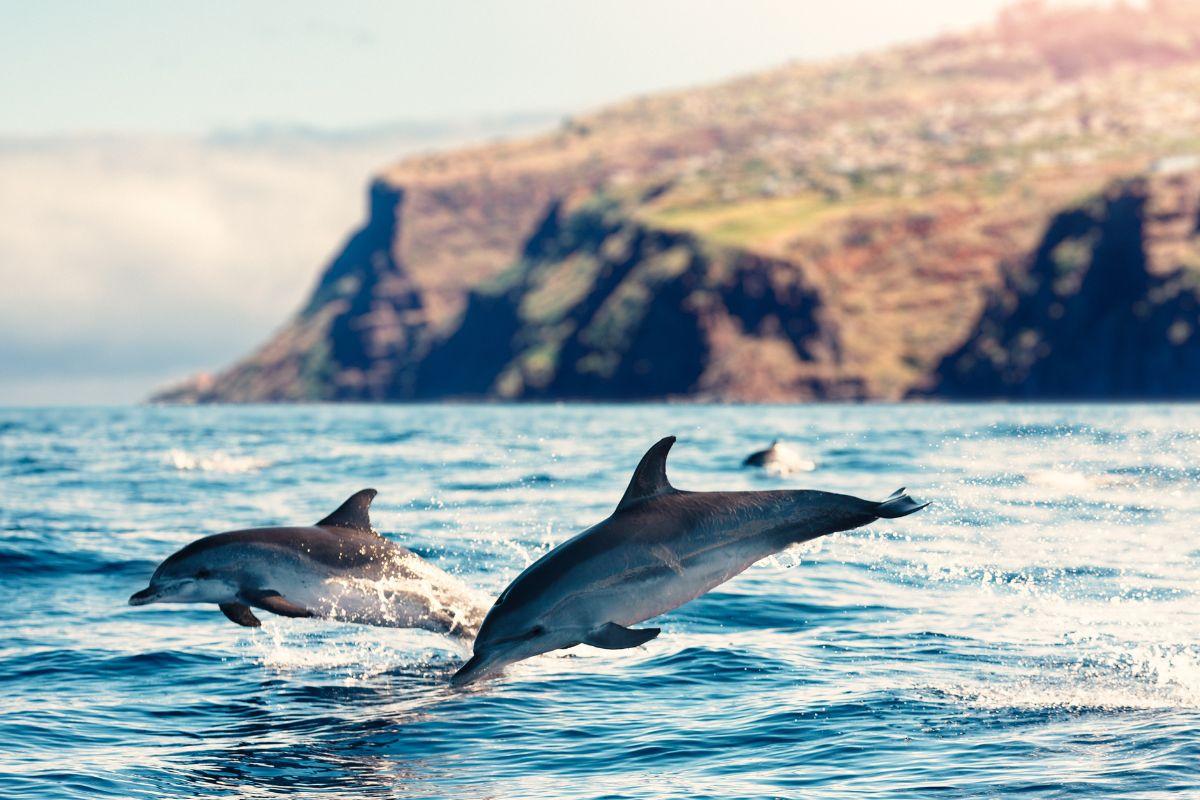
The Atlantic waters around Madeira are a fantastic place for whale and dolphin watching. Whales and dolphins can be seen all year round in Madeira. What's more, unlike other destinations, you have to get away from the shore to see them.
Depending on the season, there are 2 or 3 species of whales and more than 20 different species of dolphins in the waters around Madeira. The best time to see whales in Madeira is in summer, from April to October-November. But whichever period you visit, your chances of seeing at least a few dolphins are very good. What's more, pilot whales and sperm whales can be seen at any time of year.
So it's not surprising that whale and dolphin watching tours are among the most popular activities in Madeira. There are so many tour operators offering whale watching tours in Madeira that competition is high and prices are very affordable. You can choose to travel on a speedboat, catamaran or larger ferry, depending on your interests and budget.
Practical information: Most excursions leave from Funchal Marina or Calheta and last between 2 and 3 hours. While you can usually find an excursion on the same day, you may have to wait a few hours for the next available option. Plus, there are so many ticket kiosks that the choice is overwhelming, and it's really hard to compare what you're getting.
TIP: We strongly recommend that you research and book your excursion in advance! That way you can choose the type of boat you like, check group sizes, see if there are any age limits and if there are toilets or food/drink on board if that's important to you. What's more, by booking online you can easily compare prices, check departure times and choose the best tour for you and your family.
Curral Das Freiras (Valley of the Nuns)
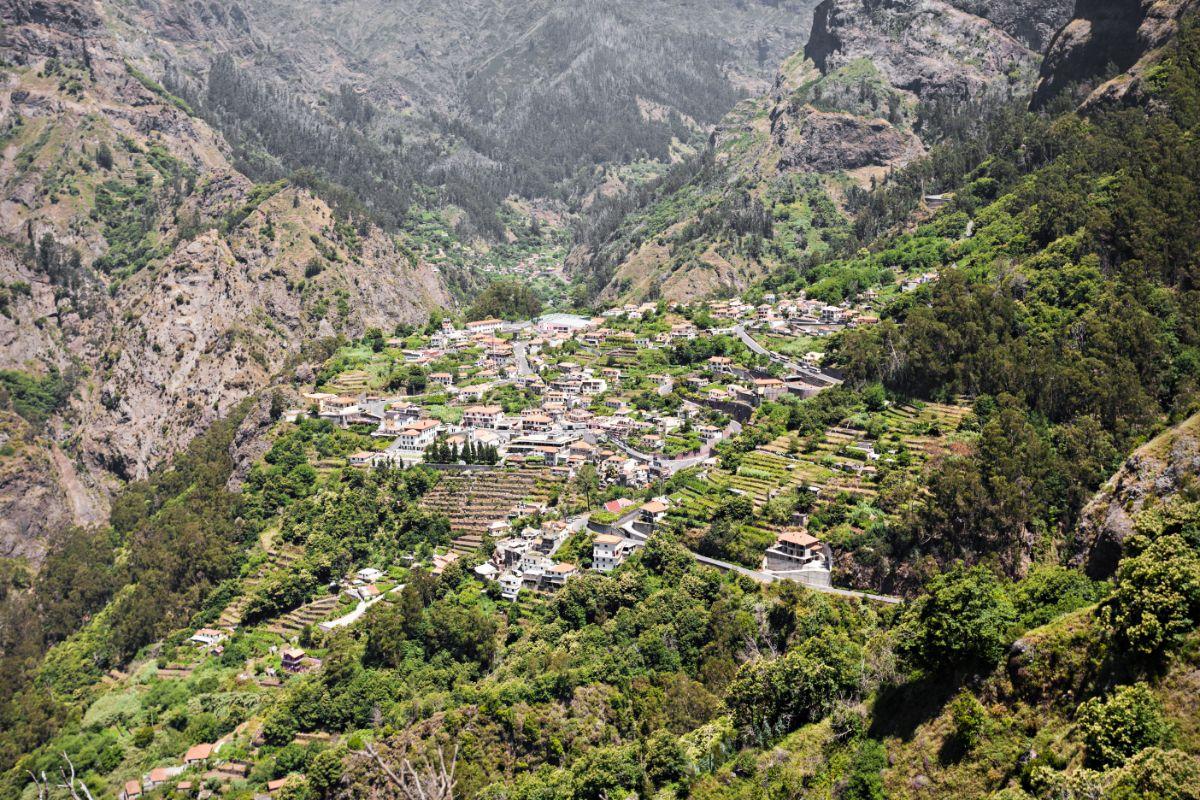
Curral Das Freiras (aka Nuns Valley) is another place that many consider a must-see in Madeira. Due to its proximity to the capital, Curral Das Freiras is a very popular destination for cruisers and also forms part of many organised excursions on the island.
This spectacular valley in Madeira's mountainous interior was formed in the crater of an extinct volcano. It is surrounded by vertical hills and was once only accessible by steep mountain paths. Today, a tunnel makes the valley much more accessible. However, some of the roads in this region are not for the faint-hearted.
When French pirates attacked the island in 1566, the wealthy convent of Santa Clara in Funchal was one of the main targets. The nuns took refuge in this valley in the heart of the mountains, where they were safe and had plenty of space to graze their cattle. Hence its name, which literally means "corral - or stable - of the nuns".
You can visit the village in the valley or simply stop to admire the view from the Miradouro Eira do Serrado. From the car park, it's a short walk along cobbled paths to the miradouro. If you're not planning to hike the levada trails, this is a good place to see some of Madeira's most spectacular mountain scenery.
Good to know: Many tour groups stop at this viewpoint and it's a very touristy place, with a large hotel, restaurant and souvenir sellers. If you want to spend more time exploring the area (including nearby Pico do Areeiro), it may be worth staying at the Hotel Eida do Serrado for a few nights. This will also save you driving on the steep inland roads. For quiet views away from the crowds, you can hike from Eira do Serrado to the village. However, the views are much the same as those from the summit. The hike takes around 1 hour (and you can take a bus or taxi back up). Good hiking boots are recommended!
TIP: Curral Das Freiras is famous for its chestnut specialities - from soup to cakes. You can try some of them in the village's shops, cafés and restaurants.
How to get there Vallée des Nonnes is 20 km from Funchal. If you're driving, be prepared for hairpin bends and steep descents on the road. You can also take a bus from the city centre or come with an excursion. If there's no space in the viewpoint car park, wait a few minutes - most people don't stay that long.
TIP: The nearby Miradouro do Paredão and several other viewpoints along a steep mountain road towards Pico do Areeiro also offer good views without the crowds. If you have a car, don't forget to check out this road too!
Caves and volcanism in São Vicente
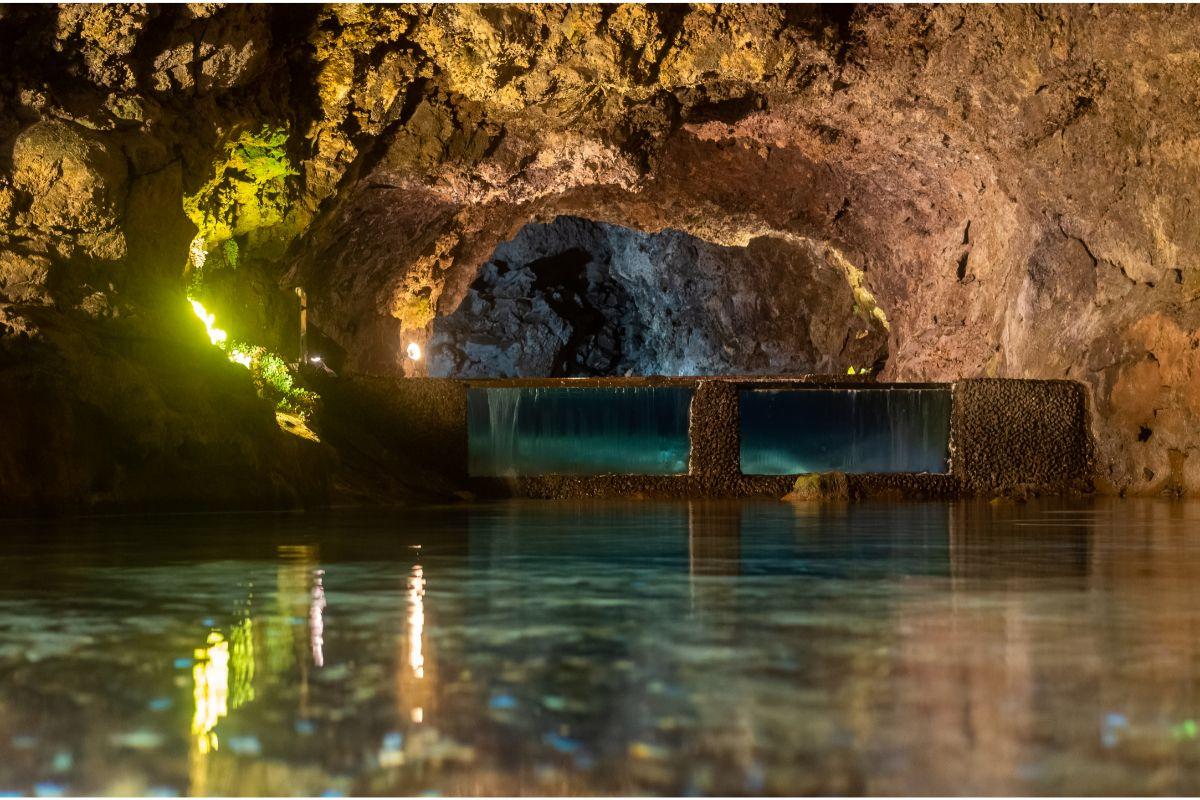
The centre of São Vicente is a small seaside town on Madeira's north coast. It is best known for the Grutas de São Vicente, one of Madeira's most popular tourist attractions.
Although you may have seen many underground caves before, these are quite unique and well worth a visit. The caves are not limestone caves but huge lava tubes. They were formed by volcanic eruptions almost 900,000 years ago.
You can explore 1,000 metres of underground tubes on a guided tour. After your visit, head to the on-site volcanic centre to learn how the caves and Madeira Island were formed.
Practical information: The Sao Vicente caves are normally open every day except Monday. You don't need to book in advance and can normally join the next visit when you arrive. For the latest information, visit their website. There is also free parking, toilets, a shop and a café on site.
How do I get there? You'll need a car to visit this place. It takes around 30 minutes to get to Sao Vicente from Funchal.
TIP: The caves of Sao Vicente are a great attraction to visit on a rainy day in Madeira. It's also a refreshing option to escape on a hot summer's day. Plus, if you're in town, check out the local restaurants by the sea. We recommend Restaurante Caravela. This is a no-frills local restaurant serving some of the best fish and limpets in Madeira.
Traditional houses in Santana
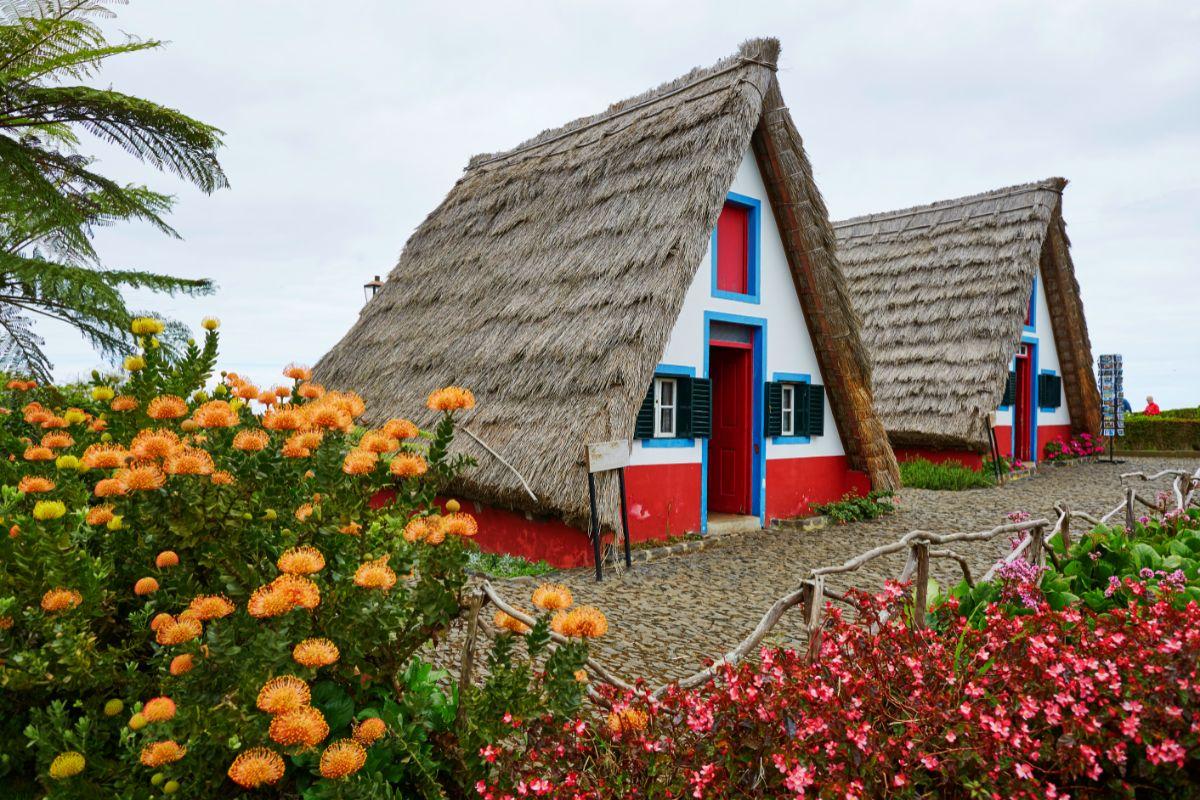
Santana's traditional houses are one of Madeira's most photographed spots. These are the brightly coloured, triangular shaped, thatched houses you've probably seen on postcards and Madeira travel guides.
There are several houses open to the public in the centre of the town of Santana, on the north coast, and they are free to visit. During the day you can buy local products and souvenirs. There is also a small tourist information centre. But even if the houses are closed, you won't miss much - they're more impressive from the outside.
Good to know: You only need a few minutes here, and that makes Santana a popular stop on your way to/from Pico Ruivo (Madeira's highest peak mentioned above) or Parque Florestal das Queimadas (see below). This isn't really a place you want to drive to just for itself - it's a really long drive for such a short visit. So it's best to combine Santana with other places of interest in north-east Madeira.
TIP: You can learn more about these houses and the island's history and culture at the Madeira Theme Park ( Parque Temático da Madeira ), a 10-minute walk or short drive from Santana. The park is open every day except Monday.
This is not a theme park with roller coasters. Instead, it has four sections tracing Madeira's geology, history and culture. There are play areas, pretty gardens, traditional craft exhibitions and a boating lake. It's fun, affordable and particularly enjoyable for families looking for something fun to do in Madeira with children.
How do I get there? The best way to visit Santana is by car, and most tours of Eastern Madeira include a short stop here. There's a large car park right next door, but it can get very busy. So parking can be a problem if you come at the time of the guided tours. For this reason, it's best to come early or late in the day.
Queimadas Forest Park Queimadas
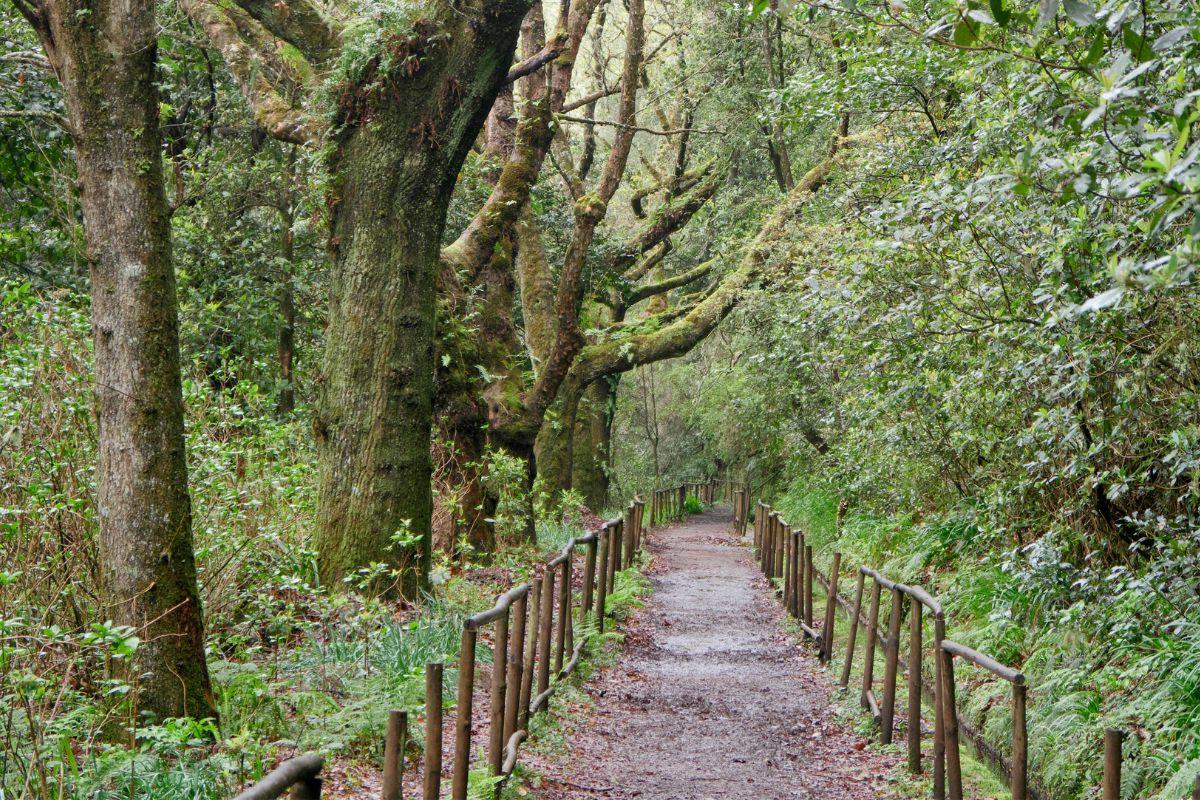
The Forest Park is one of the most beautiful places to see in Northern Madeira. And it can easily be combined with a visit to the traditional houses of Santana (mentioned above).
This otherworldly and wildly romantic park contains Madeira's last Laurissilva trees. This is why it is a UNESCO World Heritage Site. Many other plants can also be found here, and the park is at its most beautiful in spring, when the rhododendrons and azaleas are in full bloom. The area can be explored via a network of idyllic forest trails suitable for all ages.
Queimadas Forest Park is also the starting point for several levada walks with superb views of Madeira's northern coastline. One of Madeira's best levada hikes - the Levada do Caldeirão Verde - also starts here.
The Levada do Caldeirão Verde trail winds for over 6 km through the Sao Jorge Valley, culminating at the 100 metre high Caldeirão Verde waterfall. Be prepared for muddy paths, dark tunnels and incredible scenery.
How do you get there? The forest is an hour's drive north of Funchal. If you don't have a car and want to get there, there are a number of friendly excursions that will take you there, including the hike mentioned above (Levada do Caldeirão Verde ).
TIP: Avoid coming here at weekends, as the area is very popular with the locals. Many families come to spend a day in the park, bringing a barbecue, etc...
Practical information: There is a café and toilets at the entrance to the park, next to the traditional-style thatched houses (used as holiday accommodation by Forest Service employees). There is on-site parking, which has recently been extended and currently costs EUR 3 (and the machines only take cash). You can also park in the nearby Pico das Pedras car park, just a short walk away.
Balcões and Ribeiro Frio viewpoints
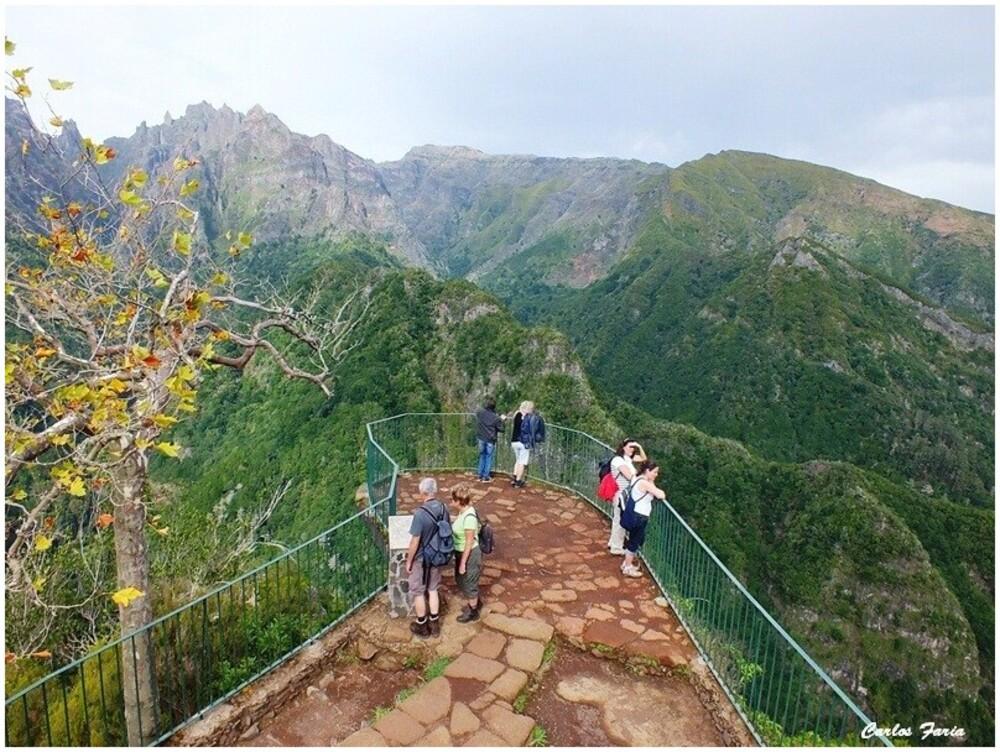
Just north of Funchal, in Madeira's rugged interior, is another popular place to visit: Ribeiro Frio. It's a picturesque, mountainous region, known for its trout farming and as the starting point for a number of levada hikes.
One of Madeira's most popular walks - Vereda dos Balcões - is located here. Its popularity is easy to explain: it's one of Madeira's easiest and shortest walks, offering fantastic views. It's also a lovely - if muddy - walk through beautiful forest.
This easy, flat, 0.5-1 hour walk is suitable for all ages and fitness levels.
The trail offers some incredible views, particularly at the Balcoes viewpoint at the end of the path. On a clear day you can see Madeira's three highest peaks, Pico do Arieiro, Pico Ruivo and Pico das Torres.
This trail is gentle and a spectacular introduction to hiking in Madeira. It's also a good place to see native vegetation and bird species such as the trocaz pigeon.
How do I get there? You can get there by car or bus from Funchal. It's only about 18km from the city, but the roads are really narrow and winding, so allow at least 40-45 minutes to get here. It's not always easy to park along the road and, depending on where you find a space, the walk can take twice as long. This popular tour of the east of the island includes the Vereda dos Balcões hike and a visit to the Ribeiro Frio trout farm in its itinerary.
TIP: As a very accessible and popular spot, it gets very busy in high season. Visit early in the morning and on a clear day for the best views.
Day trip to Porto Santo
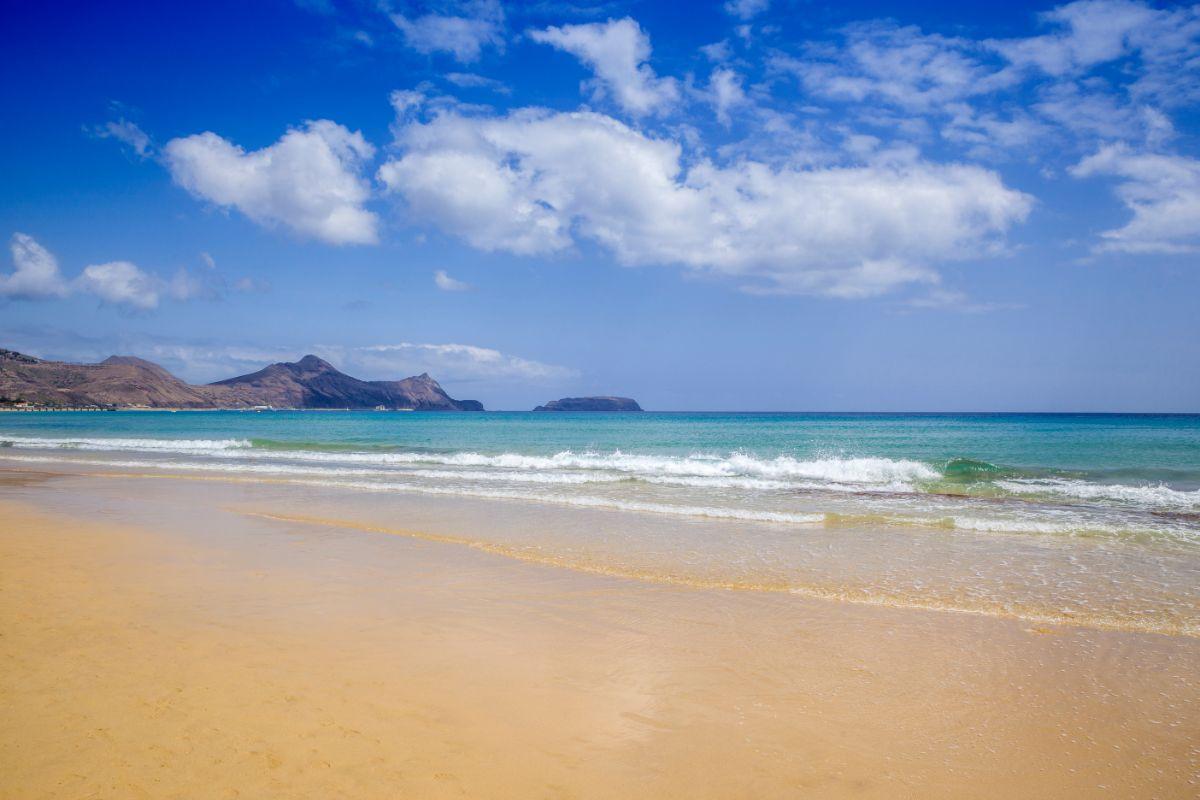
Located about 75 km north-east of Madeira, Porto Santo Island is a popular place to visit if you're on a long Madeira holiday and have lots of time on your hands.
The island is smaller, flatter and more arid than Madeira. However, it has something that Madeira lacks: long golden sandy beaches. In fact, Porto Santo has 9 km of sandy beaches. What's more, as beaches are rich in calcium and magnesium, they are reputed to have therapeutic properties.
You can spend a day at the beach, go snorkelling or book a kayak trip to Porto Santo's superb Calheta beach.
If sunbathing and swimming in crystal-clear, warm water isn't for you, you can also book an excursion and explore this 11km-long island by 4×4. You can also take a stroll through the streets of the capital, Vila Baleira, and visit Christopher Columbus' house. Climb Pico do Facho, the island's highest peak (517 metres), or visit the palm farm (Quinta das Palmeiras).
How do you get there? Porto Santo can be reached in 15 minutes from Funchal's Cristiano Ronaldo airport. Alternatively, you can take a 2.5-hour ferry crossing each way. Boats to Porto Santo leave from the Funchal marina and you absolutely must book in advance.
Good to know: While Porto Santo can be a great holiday destination in its own right, it is possible to visit the island on a day trip from Madeira, also if you take a boat. There's usually an early morning ferry from Funchal and a late evening ferry back.
TIP: If you want to visit the island, but find it difficult to plan a day trip, check out this highly rated day trip. It includes the ferry and island tours.
Additional recommendations for things to do in Madeira
As already mentioned, we don't want to overwhelm you with too many options of places to see and things to do in Madeira. So in our article we've tried to focus on the most popular sites and activities.
However, if you already have everything you need and/or are looking for more ideas on what to see in Madeira, here are some additional recommendations:
Fun outdoor activities
Madeira also has a lot to offer those looking for a more active holiday. Whether it's hiking, cycling, surfing or bodyboarding, adventurous canyoning trips or fun 4×4 excursions, there's plenty to do in Madeira to keep you busy, whatever your interests!
Seixal
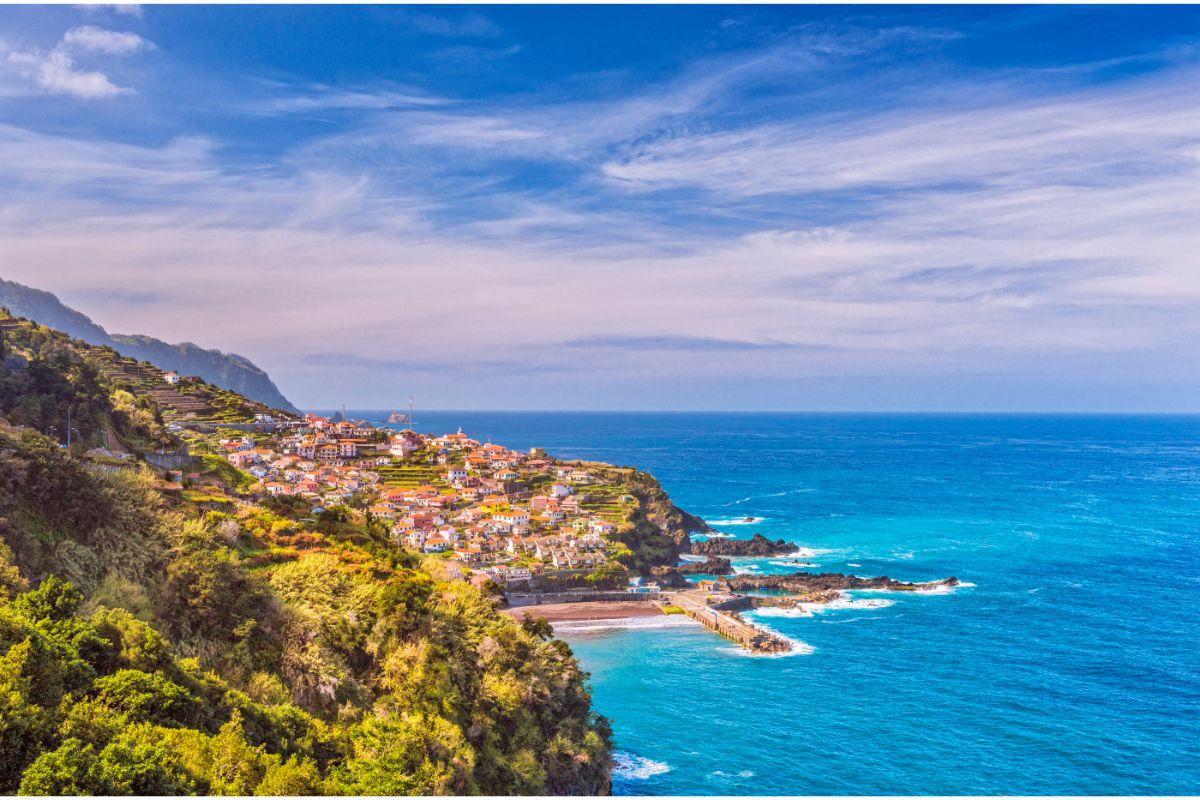
This is a small community with a beautiful black sand beach and some natural volcanic pools on Madeira's north coast. If you're looking for a quieter alternative to the popular Porto-Moniz, this could be a good option.
Camacha, aka Madeira's basketry capital
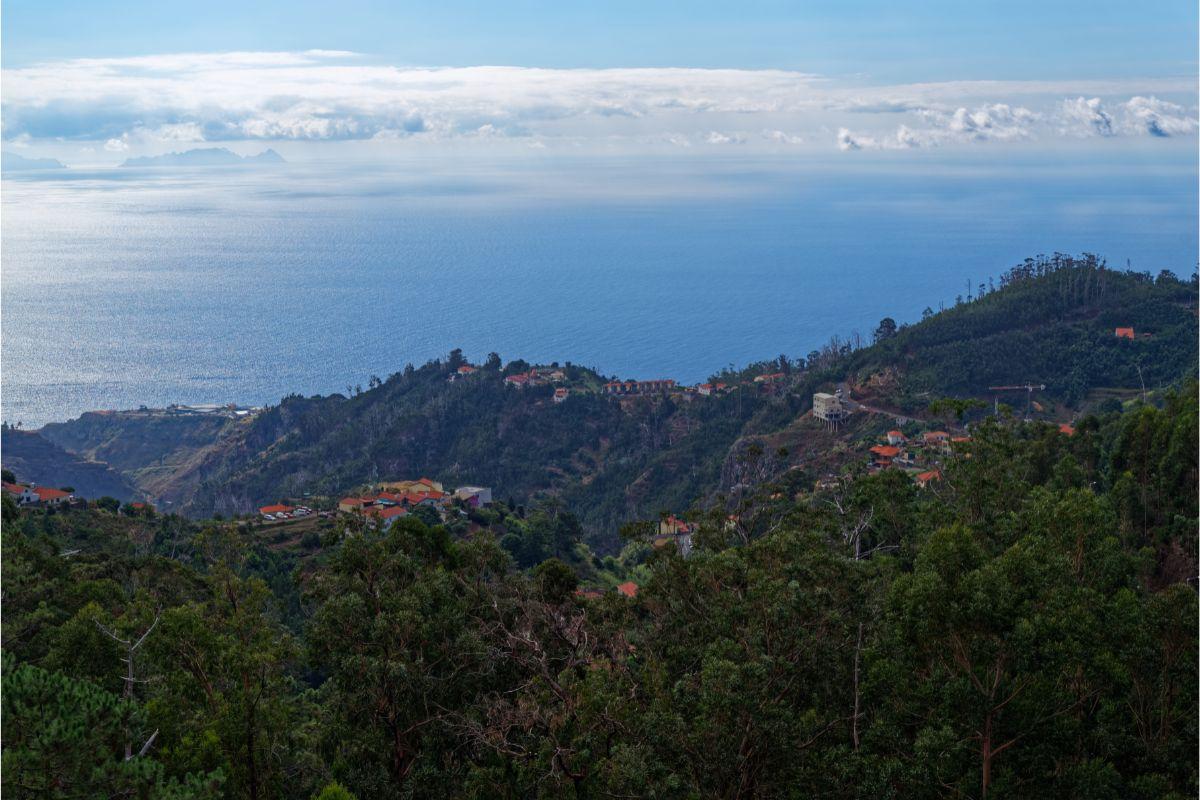
This place is often mentioned as one of Madeira's must-see sites and many tours like to go here. However, its main attraction, Café Relógio, with a wicker museum and weaving demonstrations, seems to have closed for good. You can still visit the Camacha Wicker Factory, but it's just a small, unassuming shop where you can watch a traditional basket-weaving demonstration and buy a few woven items (if you have room in your luggage).
The Madeira Whale Museum (Museu da Baleia da Madeira) in Calheta
This is a neat little museum where you can see some great whales and learn more about the history of whaling in Madeira.
Posto Florestal Fanal
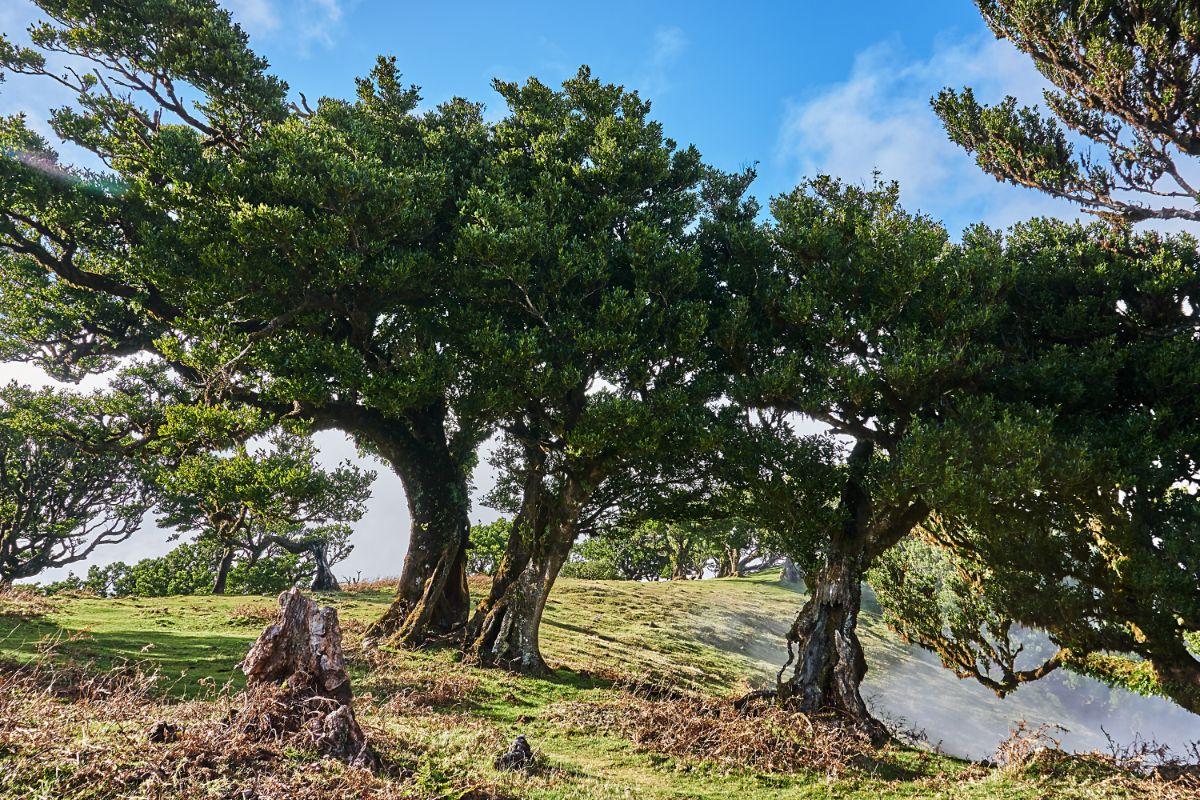
This is an ancient laurel forest in the north-west of Madeira. It looks very special and mystical in the fog. If you manage to catch this place when the clouds are low, it gives off a truly unique atmosphere that, for many, is worth the long drive.
Madeira's north coast:
If you have a little extra time and don't mind winding roads, drive the whole of Madeira's north coast. The views are well worth it!
Paul da Serra:
It's the interior of Madeira that you can explore by driving the ER110 road. There are some very beautiful viewpoints here, like the Miradouro da Bica da Cana or the Miradouro Molinas...
There are other villages, viewpoints, coastal areas and mountain roads worth visiting in Madeira if you have even more time. But the above list should keep you busy for a week or two.
Getting around Madeira
There's no doubt that a hire car or taxi is a convenient way to get around the island. All taxi drivers have a government-approved price list for journeys outside Funchal. However, don't be afraid to negotiate. Your hotel porter may be able to suggest a driver for a day trip. Some drivers are particularly knowledgeable about the island's culture and customs, while others are keen walkers.
Coach tours are the most popular way to "see Madeira in a day". They offer a relaxing experience and a remarkable overview of the island's landscapes. You'll discover in comfort the landscapes you'll want to explore later at your leisure.
Another way to get around is by bus. It's economical, reliable and fun! You'll enjoy splendid views from the bus seats and the drivers are experts; you'll feel safe in their hands. Four companies operate the public transport system in Madeira - Horários do Funchal, SAM, Rodoeste and EACL (Empresa de Autocarros do Caniço) - covering different parts of the island.
Most people catch the SAM and Rodoeste buses at their main departure points on Avenida do Mar and buy tickets on the bus or, in some cases, at the operators' kiosks near the bus departure points. Reduced-fare tickets are available for the orange urban buses (HF). By the way, don't be fooled by identical bus numbers, e.g. orange urban bus 20 for Monte; green/cream rural bus 20 for Santo da Serra.
Arrive early to catch your bus! It may take you a few minutes to find the one you want, and it always leaves on time!
How long do you need to visit Madeira?
As you can see, there's enough to see and do in Madeira to easily fill a few weeks. If you can, we recommend you plan at least 7-10 days for Madeira - this will give you enough time to see all the main sights without having to rush and do the best walks.
If you have 1-4 days in Madeira and want to see as much as possible in a short space of time, the best way to do this is to base yourself in the capital, Funchal, and take part in organised tours. The most popular tours that cover Madeira's main sights usually concentrate on the eastern part of the island or the attractions on the west coast.
If you have more time, we recommend hiring a car and visiting some of Madeira's must-sees at a slower pace. In 3-4 days you should be able to cover most of the main sights. But if you want to not only see, but also explore Madeira's most beautiful spots and go hiking, you'll need at least 5-7 days on the island. And that's if you want to stay a bit more relaxed and enjoyable and not have to rush around everywhere.
When should you go to Madeira?
Madeira and Porto Santo are known for their warmth; it's hot all year round.
Autumn arrives slowly in September, and the weather is always warm and sunny in October and November. Average temperatures are between 23ºC and 17ºC, which is actually better than the English summer. It's a bit difficult to talk about winter in Madeira, because in Madeira it's always summer.
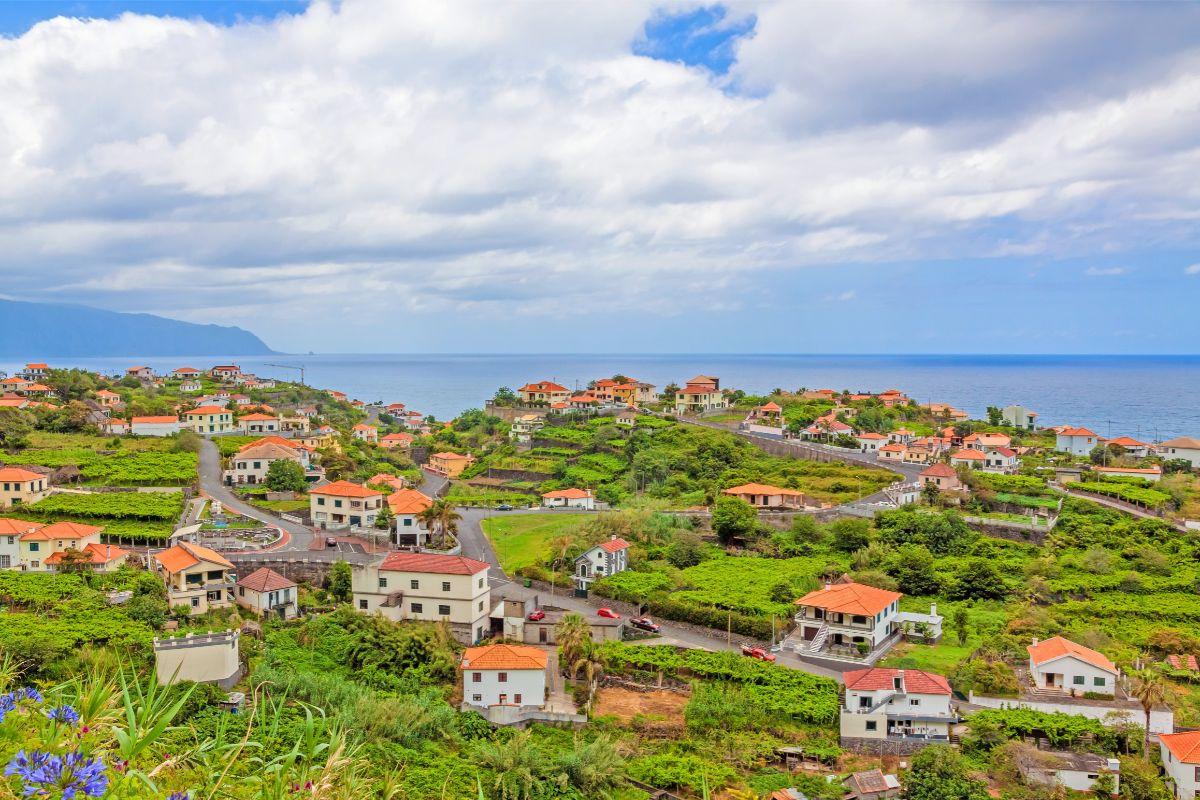
During the day in Funchal it's around 20ºC and at night it's usually over 14ºC. This temperature range is therefore particularly attractive to tourists from Northern Europe, who seek Madeira as a sunny destination in winter.
The best time to go to Madeira and enjoy warm weather and comfortable temperatures is in spring or autumn. It's still warm and you'll enjoy at least nine hours of glorious sunshine a day. Average monthly rainfall ranges from 9 mm in summer to 81 mm in the winter months, which run from December to February.
See also: Madeira, one of Portugal's warmest cities in winter
Favourites
Europe's best island destination!
The island has been named Europe's best island destination seven times in the last eight years. The islands have also been named Europe's best island destination seven times in the last eight years. Madeira's islands boast superb beaches, natural lava pools and unique hiking trails along stone irrigation channels.
See also:
What to do in Portugal, hidden and unusual things to discover!
FAQ What to do in Madeira
What is Madeira famous for?
The region is known for its gastronomy, its historical and cultural value, its flora and fauna, its landscapes (laurel forest), which are a UNESCO World Heritage Site, and its embroidery crafts.
What is the most beautiful part of Madeira?
One of the best things about living in Madeira is its coastal villages. And Ponta do Sol is undoubtedly the most beautiful. Rows of pastel buildings and a magnificent pebble beach give the village its unique charm. Ponta do Sol is also known for being the sunniest place on the island and is a great place to watch the sunset.
Are there beaches in Madeira?
Madeira Island is not generally known as a beach destination, unlike Porto Santo, famous for its golden sands. However, Madeira's beaches will surprise you!
Is Madeira too touristy?
Yes, Madeira is a popular destination and some of the main tourist attractions can be very busy. But for the most part, Madeira is still very quiet and undiscovered.
Are mosquitoes a problem in Madeira?
Madeira is a subtropical island that differs from other places with a similar climate in a very special way. The island has virtually no parasites and is free from dangerous insects and bugs. Wild animals are limited to rabbits and birds. There are no snakes or swarms of irritating mosquitoes!
Can you get from Madeira to Porto Santo?
The "Lobo Marinho" is a modern ferry that carries passengers and vehicles daily between Madeira Island and Porto Santo. The "Lobo Marinho" is a modern ferry that carries passengers and vehicles daily between Madeira Island and Porto Santo, on a journey that takes around 2 hours and 15 minutes.